

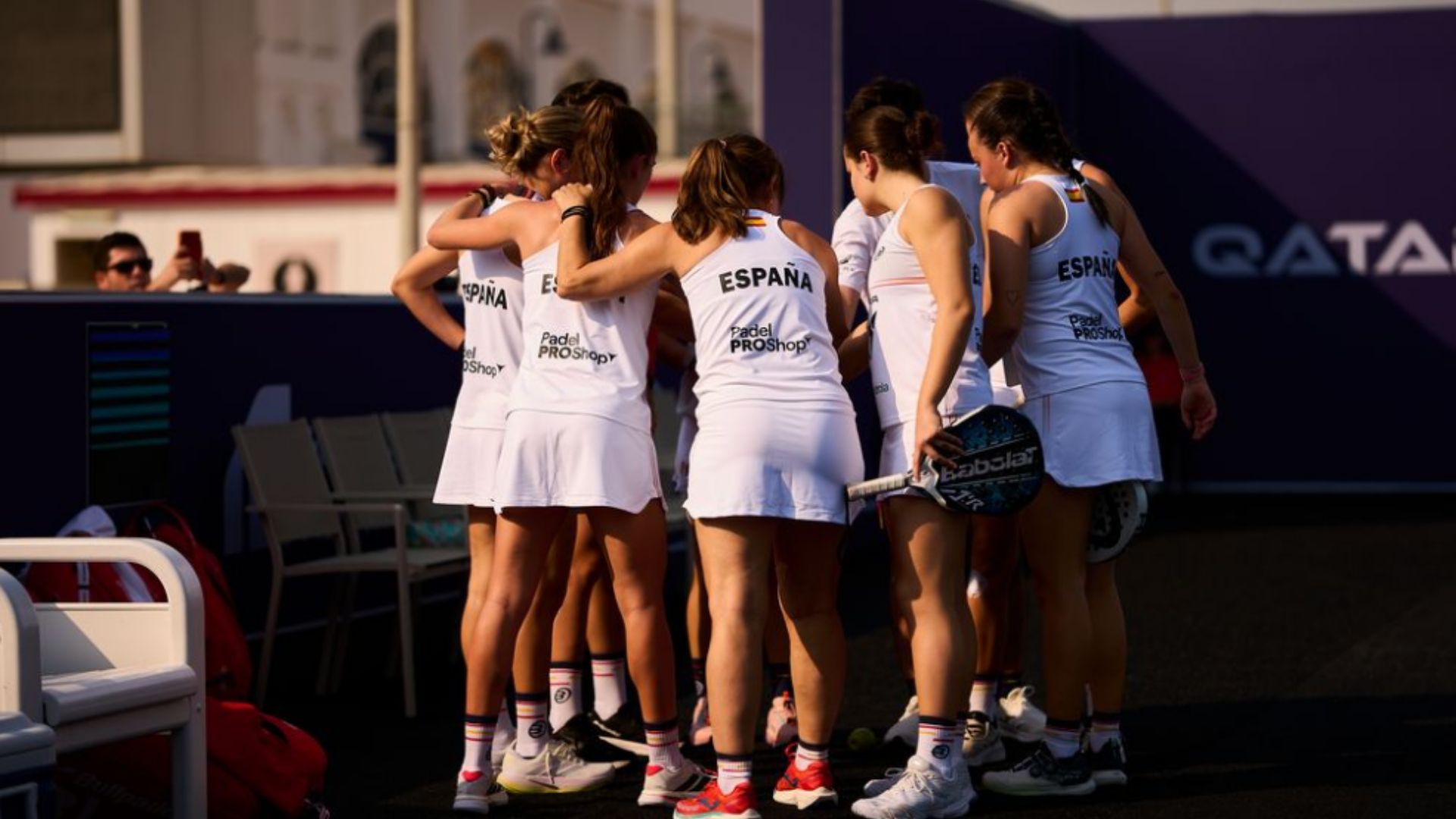








6/0 6/1. 6/1 6/0. 6/0 6/0. In their opening match of the FIP World Cup in Doha, Spain gave Germany little chance to believe in an upset. Claudia Fernández and Bea González opened the day with a 6-0, 6-1 victory, Paula Josemaría and Martina Calvo continued in the same vein with a 6-1, 6-0 win, and then Gemma Triay and Marta Ortega finished the job with a double 6-0.
Balance sheet: 36 games won, only two conceded. Obviously, Germany doesn't represent the level of opposition Spain will face in the later rounds. But behind these almost absurd scores lies perhaps the real problem posed by the Spanish team: to beat them, it's not enough to find one pair capable of pulling off an upset. You need to find two.
Eight players, virtually no weaknesses
The Spanish team has an almost unique characteristic in this World Cup: all eight of its players belong to the very highest international level. Gemma Triay, Bea González, Ari Sánchez, Paula Josemaría, Andrea Ustero, Claudia Fernández, Martina Calvo and Marta Ortega offer a depth that very few nations can approach.
In other words, even with two players on the bench, Spain can field three extremely competitive partnerships. And the first day perfectly illustrated this. La Roja didn't even need to use the usual pairings on the tour: Fernández with González, Josemaría with Calvo, Triay with Ortega. Three different partnerships, three very comfortable victories.
It is precisely this ability to recompose their duos without really lowering the overall level that makes Spain so difficult to attack.
The problem isn't winning one match, but winning two.
Let's consider the possibility of a future final against Argentina. The Argentinian team obviously has players capable of beating any Spanish pair in a single match. Delfi Brea is the most obvious example, and the 2024 World Cup final showed that Argentina could truly push Spain to its limits.
On that day, Delfi Brea and Claudia Jensen had won the first set 6/3 against Ari Sánchez and Paula Josemaría, then served for the match at 5/4 in the second set before finally losing 3/6 7/5 7/5. The feat was very close.
But this is precisely where the Spanish problem becomes fully apparent. Even with this point, Argentina still needed a second victory. However, in the other match, Gemma Triay and Claudia Fernández had defeated Virginia Riera and Julieta Bidahorria 6-3, 6-2, and a third match was still to be played.
Against Spain, a team doesn't just need to achieve one feat. It often needs to achieve two in the same day.
The team format gives Spain a huge advantage.
On the circuit Premier PadelA pair can have an off day and be eliminated. In a national team competition, the logic is very different: you have to win two of the three matches. And this format greatly benefits teams with significant depth.
This is precisely the case for Spain. If Gemma Triay has an off day, there's still Bea González, Paula Josemaría, Ari Sánchez, Claudia Fernández, Andrea Ustero, Marta Ortega, and Martina Calvo. It's even difficult to define what the Spanish "third pair" would actually be, as it could still be composed of players accustomed to reaching the quarterfinals, semifinals, or finals of the biggest tournaments on the circuit.
This is probably what most distinguishes Spain from its main rivals. Argentina has several players capable of competing at the highest level, and Italy and Portugal also have solid profiles, but no other nation can spread so much talent across three fields.
Spain can also choose the type of match it wants to play
The richness of Spanish talent isn't just quantitative. The profiles are very diverse, allowing for the creation of pairings tailored to the desired scenario. Gemma Triay brings her game control and tactical awareness, Bea González her explosiveness, Paula Josemaría her speed and aggression, Ari Sánchez her playmaking ability, Claudia Fernández her stability, Andrea Ustero her left-handed power, Marta Ortega her experience, and Martina Calvo an impressive freshness at only 18 years old.
This diversity allows the Spanish coach to build his pairings according to the opponent. Need stability? He has the players for that. Need to speed things up? There are solutions for that too. Need to adjust the diagonals with a left-handed player? Several options are available.
The first day provided a very clear glimpse: Paula Josemaría was partnered with Martina Calvo and the duo won 6/1 6/0. Seeing an 18-year-old player immediately integrated into such a strong pairing shows just how deep the Spanish talent pool is.
The usual circuit pairs are no longer even essential.
Another worrying factor for their opponents: Spain isn't obligated to replicate its established lineups from the tour. The first matchday already demonstrated this with three completely revamped pairings. Against stronger opposition, these automatic plays will obviously become more important, but La Roja possesses enough individual quality to test different combinations during the group stage before settling on their pairings for the decisive matches.
While some national teams are looking for the best way to form two truly competitive pairs, Spain almost has to solve the opposite problem: Which players should be left on the bench?
Argentina has nevertheless shown a way
However, to consider Spain completely untouchable would be going too far. The 2024 final was much closer than its final score of 2-0 suggests. Brea and Jensen genuinely had the opportunity to take the second match and send the two nations into a decisive encounter.
This might be where one of the few remaining options for the opposition lies: instead of trying to compete with Spain in all three matches, focus on two specific games. Build the two best possible lineups for these encounters and perhaps accept sacrificing the third match.
Because wanting to compete on equal terms on all three fronts probably means playing exactly on Spain's preferred front: that of depth.
Perhaps Spain's real weakness is having to choose
Ultimately, this is the paradox of this team. With so many possibilities, the main danger could come from the selection itself. Which pairing should be built around Triay? Should they keep some familiar partnerships from the tour or favor new complementary combinations? Should they concentrate the best players in two very strong pairs or spread the strengths across three more balanced duos?
A poor read of the matchup can obviously open an door. But then you still have to exploit it.
Spain arrived in Doha as defending champions and their first day did nothing to reassure their opponents: 36 games to 2, three different pairs, six players used, while Ari Sánchez and Andrea Ustero didn't even need to step onto the court.
So the question may no longer really be which pair can beat a Spanish pair. Several are capable of it.
The real question is much more complicated: Which nation can beat two on the same day?
For now, this is precisely where Spain seems to have the fewest weaknesses.

I discovered the Padel I stumbled into Spain at a campsite. I was instantly hooked; passionate about padel, I follow international and regional news with the same excitement as the sport itself.






































































 Garrido / De Pascual: target Sanz and stay the course to reach the semi-finals
 FIP Silver Como – An XXL quarter-final awaits Boronad / Robert against Diestro / Fernández Lancha
 Javier Rodríguez Piris: “I would like Spain to host the World Championships in 2030”
 Dubai P1 – From qualifiers to semi-finals: Abate becomes the first Italian to reach the semi-finals of a tournament Premier Padel male
 "We're not a tournament club": the gamble taken by the two Henry sisters who are hosting a P3000 at The Break Padel Club
 Gonzalo Alfonso on his split with Tolito Aguirre: "It was painful, sad"
 2026 World Championships – Ustero in tears, Triay facing Brea: the world champions' confessions
 Paquito Navarro: "This is probably my last match with Spain."
 JAP1, JAP2: How to become a padel referee and what are the prospects?
 P2000: Scatena / Sescun, Courrin / Basso, Mansart / Bognard… the first pairs entered for the December events
 4PADEL Football Cup: Lille kicks off season 2 with a victory for Cheyrou/Cygan against Mandanda/Danic
 P3000 Bouillargues – Results / Live / Schedule
 Padel, weight training, and even HYROX: clubs are changing their model
 Padel court rentals: a global market estimated at 4,6 billion euros
 FIP Beyond: the new global padel circuit for amateurs and seniors
 More than 6,300 FIP-ranked players: professional padel is becoming international, but Spain dominates
 OSS Barcelona – Why Spain and France aren't yet playing in the same league
 Cancer and rehabilitation: could padel become a therapeutic tool?
 Padel injuries: ankle, knee, elbow, eye… what the latest figures reveal
 Shocking turn of events at Dubai P1: Coello and Tapia have also withdrawn!
 Padel serve: a good serve is especially good preparation for the third shot.
 What the analysis of the stroke reveals: tennis forehand vs. padel bandeja
 Has the bandeja disappeared from modern padel?
 Flat forehand in padel: 5 exercises from Cristian Álvarez to gain control and efficiency
 Why can Libaak/Alfonso beat almost everyone… except Coello/Tapia?
 Tapia reveals his recipe for beating Coello / Tapia: "I would bet everything on myself"
 How Coello defused Chingotto's game plan
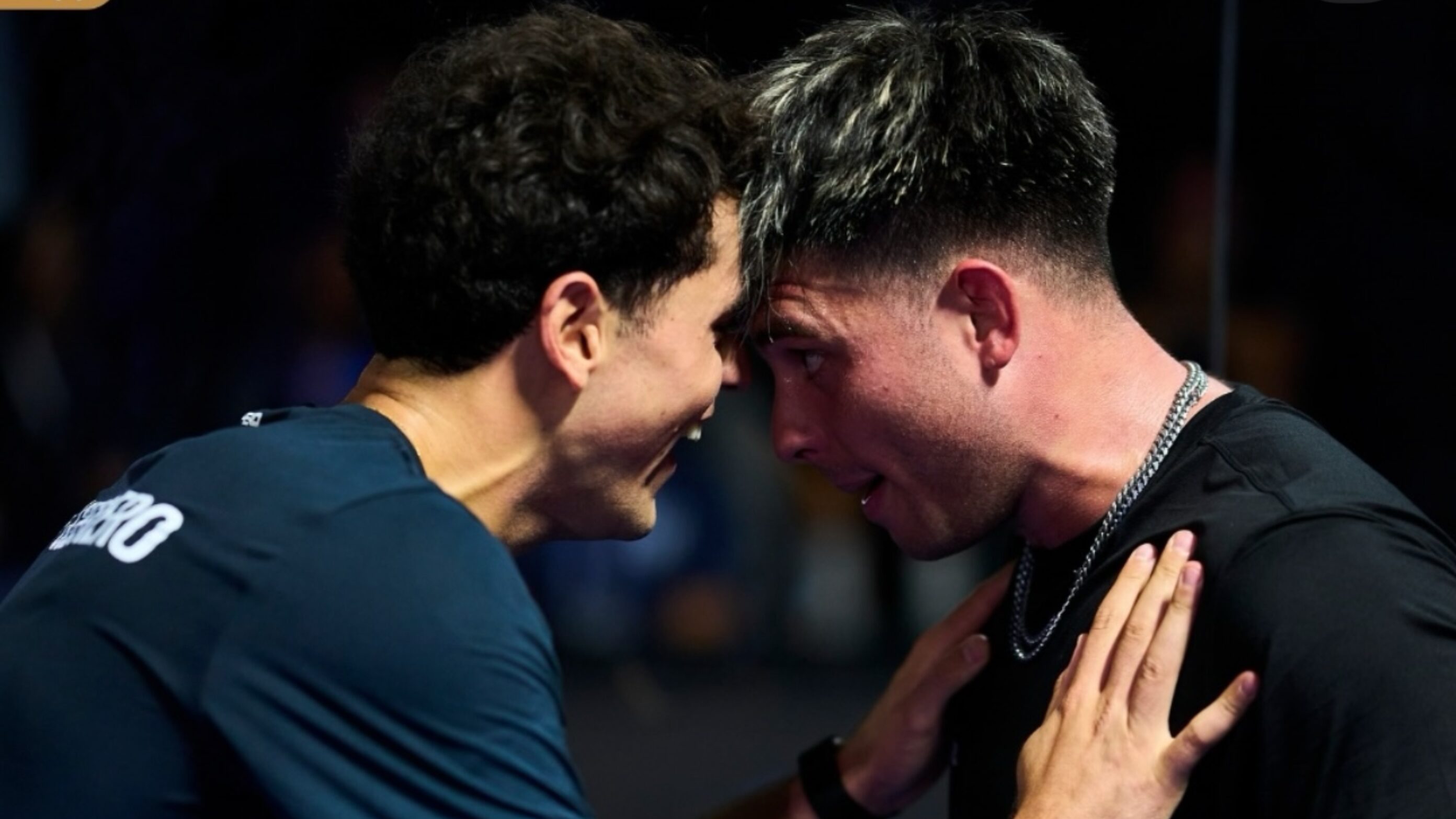 In padel, does the chemistry between a pair count as much as individual skill?
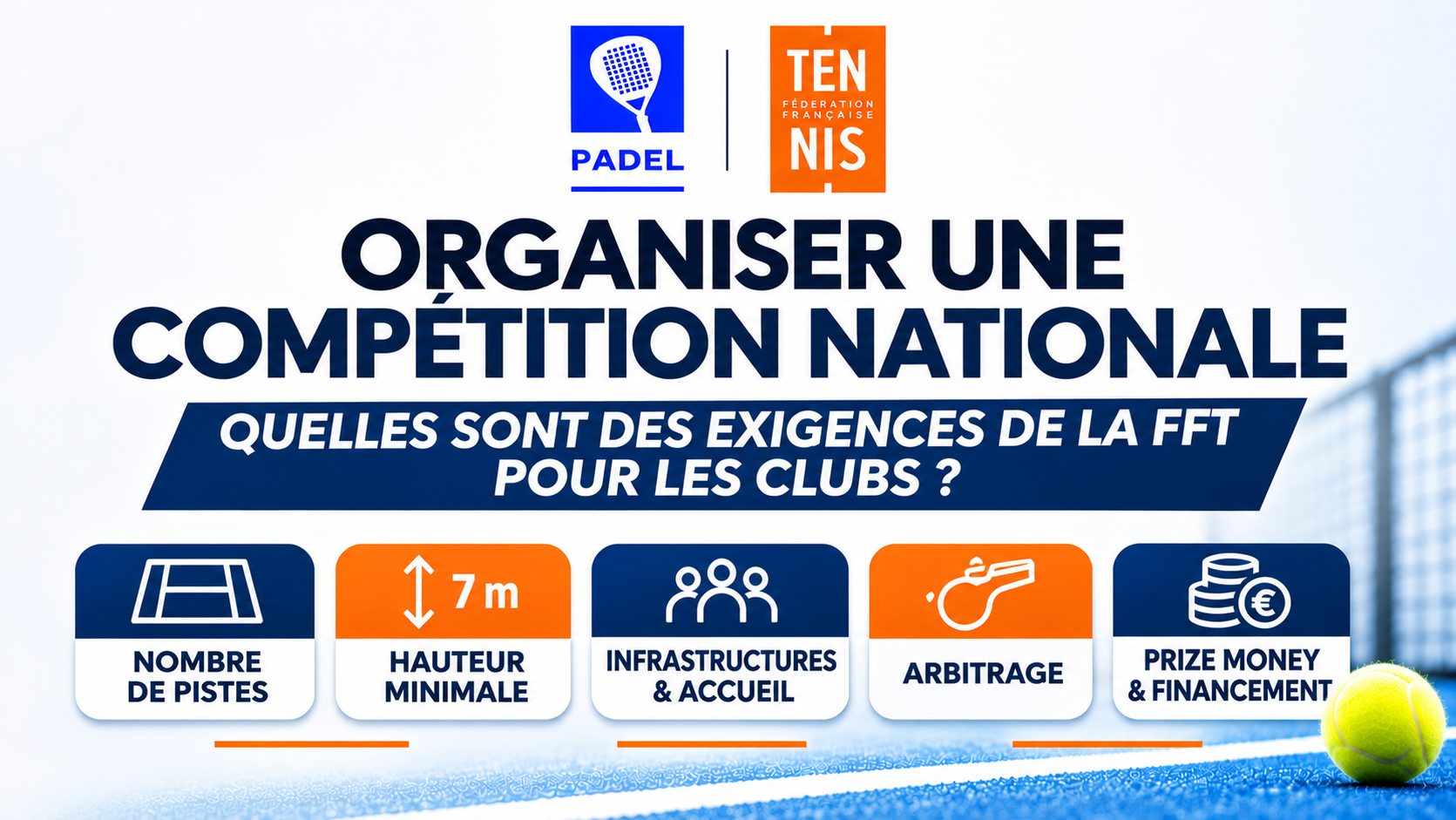 Organising a national padel competition: what are the FFT's requirements for clubs?
 Organising a P2000 or a P3000: how much does it really cost clubs?
 P2000 or P3000: what are the differences in prize money, format and organization in 2028?
 Do you lose your ranking? Padel FFT after more than a year without a license / without competition?
 Memory, reflexes, concentration: what happens in our brain when we play padel?
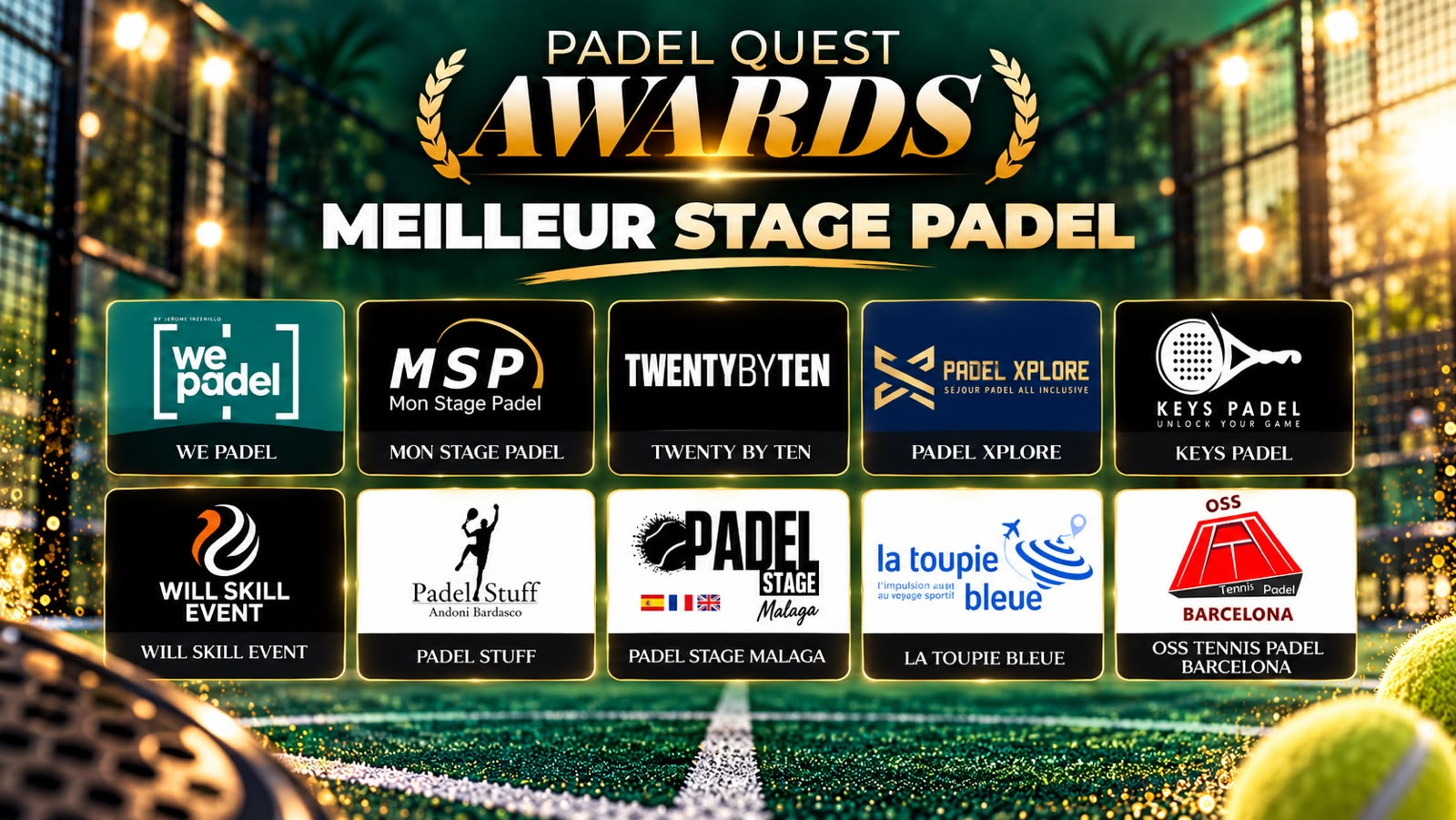 Padel Quest Awards: Ten specialists in the running for the title of best padel training camp of the year
 Padel Xperience: The Academy opens on November 2nd in Marcheprime, ahead of the complex's inauguration in 2027
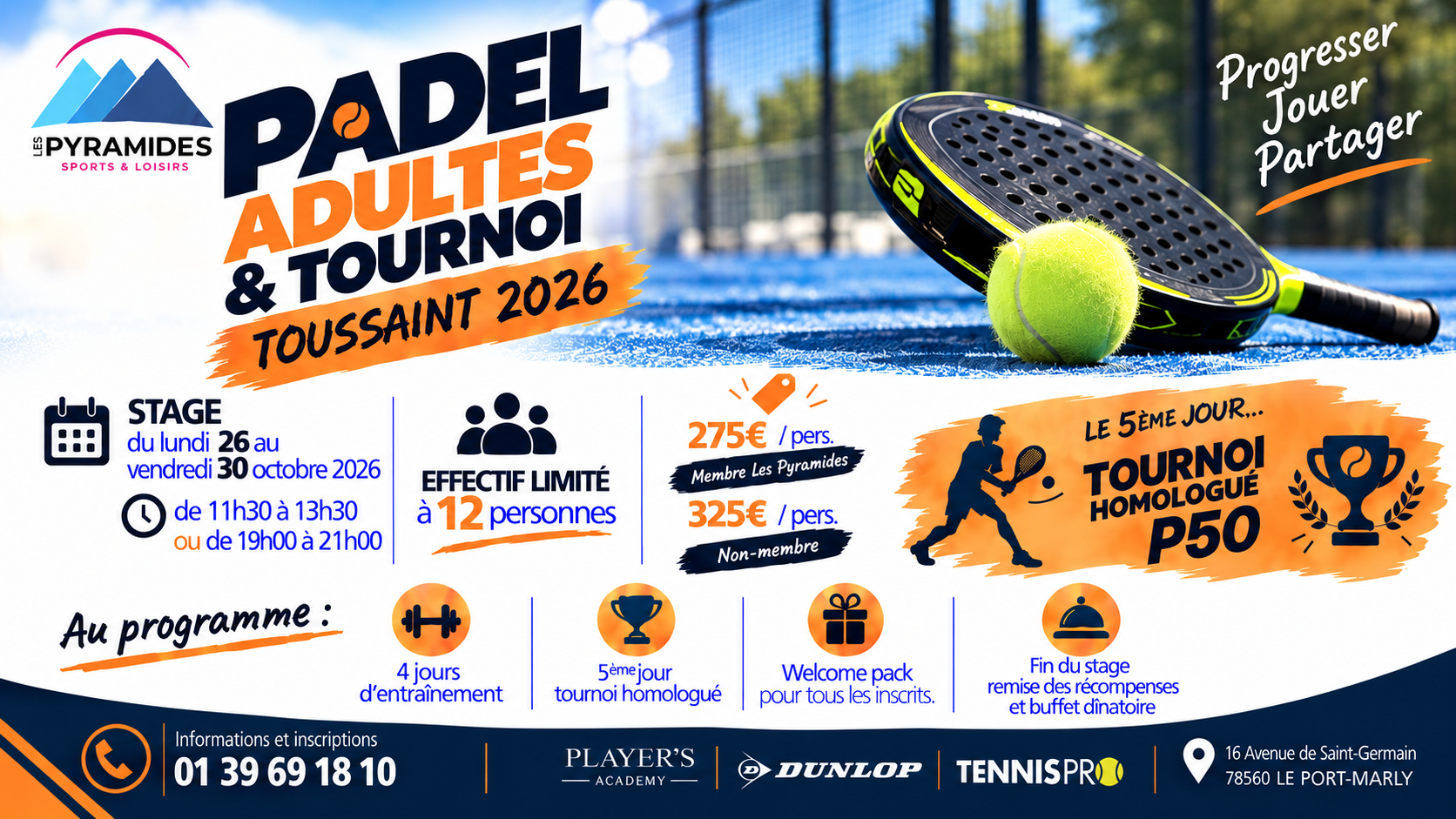 All Saints' Day – Les Pyramides are organizing a padel training camp for adults with a P50 tournament to close out the week