








45,000 registrations last season, 175,000 ranked players, more than 12,000 P50 players in just six months, and perhaps nearly 60,000 registrations by the end of the new season. French padel continues its rapid growth, forcing the French Tennis Federation to constantly adapt its competition and ranking system.
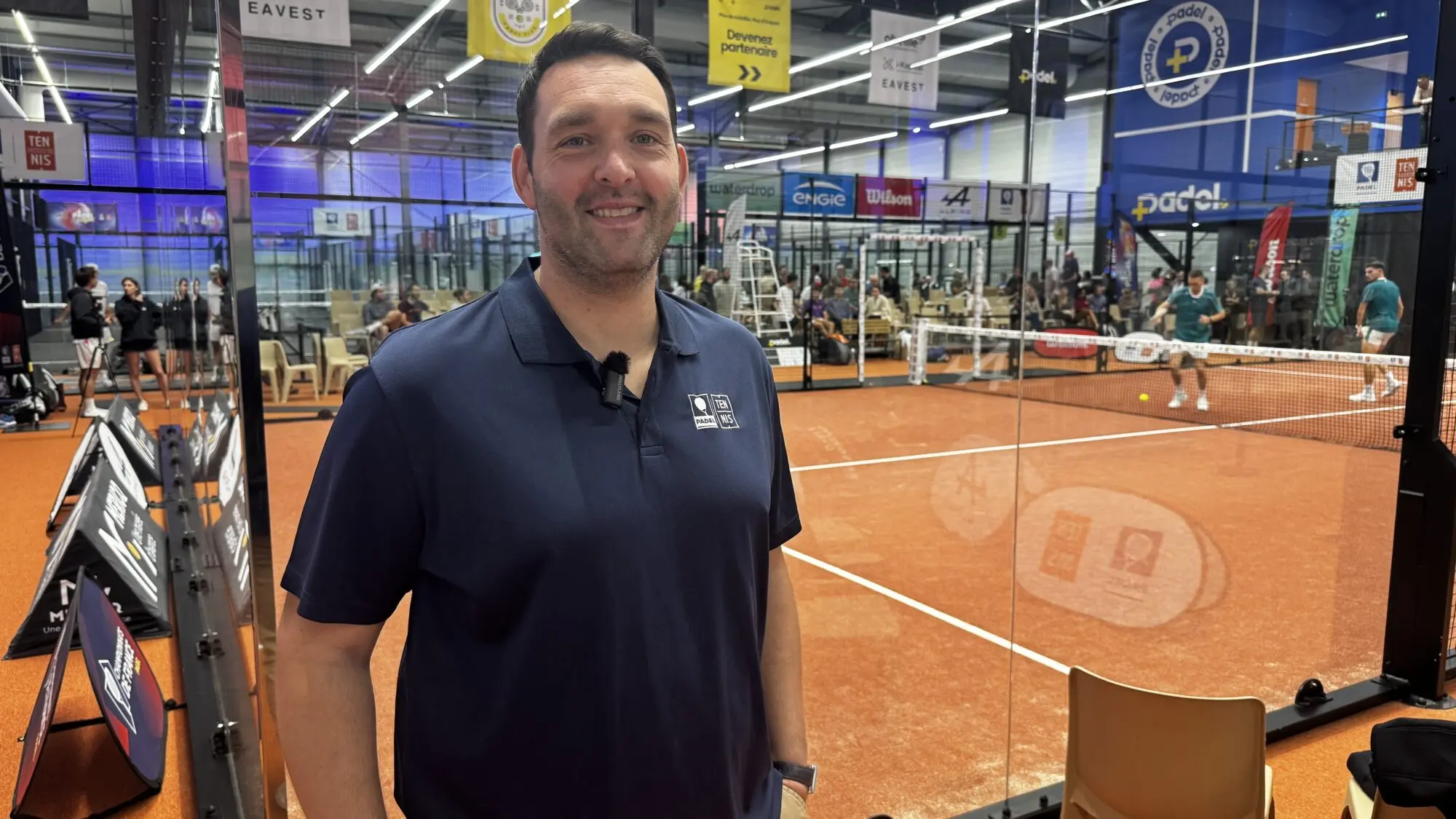
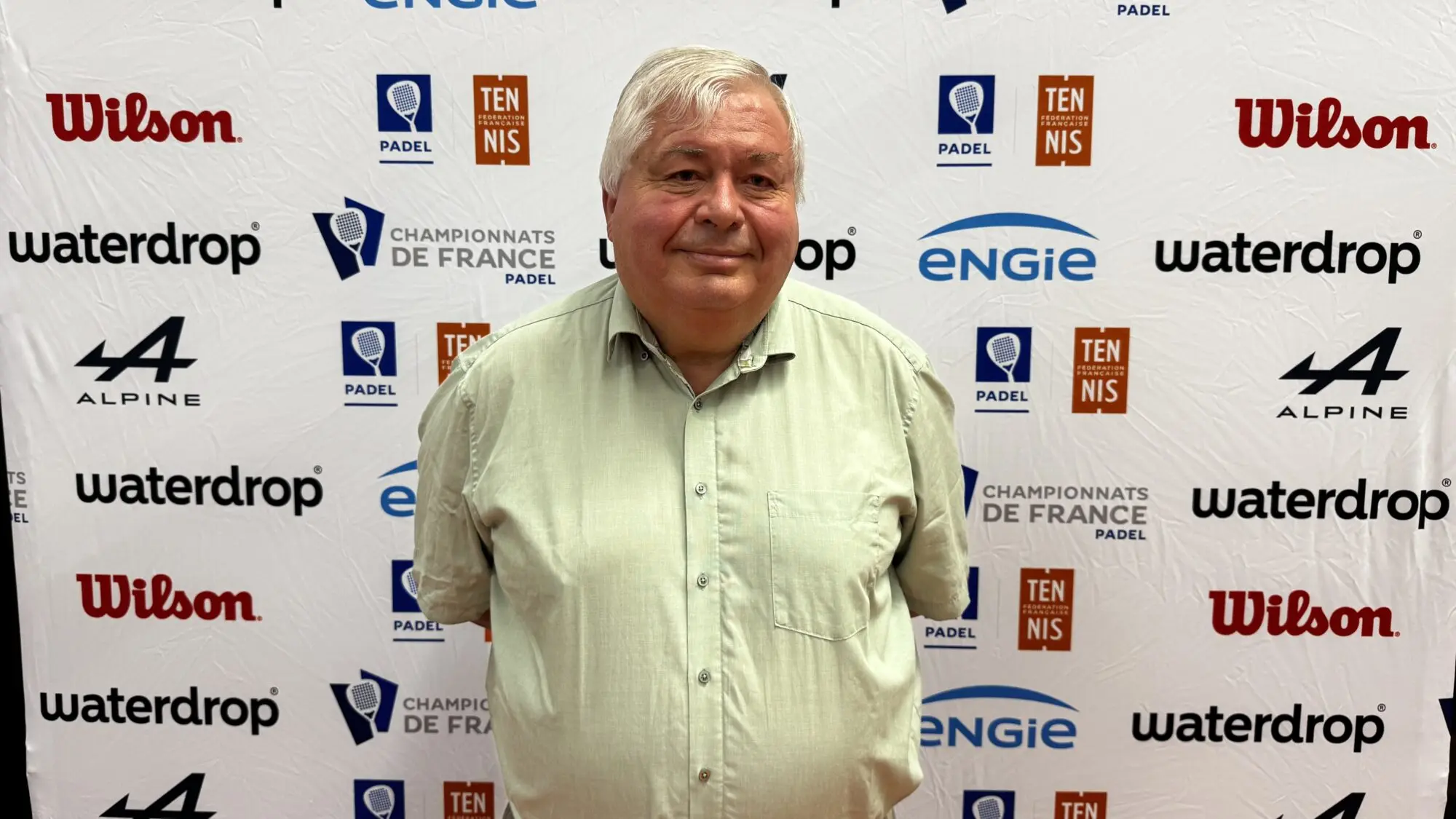
On the occasion of French Padel Championships 2026 Padel Plus Agen , Padel Magazine talked with Francois-Xavier Coninck , in charge of competitions and rankings within the FFT.
Explosion in the number of tournaments, need for better regulation of calendars, arrival of the P50, evolution of the P500, creation of the P2000 and P3000, new rules for juniors, WO, bonus-malus and possible consideration of poor performances: FX Coninck reviews the changes already undertaken and the FFT's areas of focus for the coming seasons.
"45,000 approvals is enormous."
Padel Magazine : What is your assessment of the 2025-2026 season in terms of competition and rankings?
François-Xavier Coninck: The major positive point is the significant increase in the number of competitions and competitors. We have gone from 45,000 approvals which is huge.
This proves that padel is still expanding and that players are eager to compete.
Our goal now is to continue improving this competition for the new season, so that our competitors can play in good conditions and there are even more events, while being able to regulate this growth.
It should also be clarified that when we talk about 45,000, we are talking about... approvals A single homologation may sometimes include several events, for example a mixed, women's, or men's event. The actual number of events contested is therefore even higher.
Last season, we were around 31,000 to 32,000 approvals The evolution is therefore very important.
Around 60,000 approvals?
Padel Magazine How far can this growth go as early as next season?
François-Xavier Coninck: There are still a huge number of clubs being created and, inevitably, new tournaments will appear.
I would therefore not be surprised if we could approaching 60,000 approvals by the end of the season .
We must also take into account the arrival of the P50 , created during the sports season in March. We are already at over 12,000 P50 approvals This will inevitably have a significant impact on an entire season.
Are there now too many tournaments in France?
Padel Magazine With this explosion, one question comes up regularly: aren't there now too many tournaments? Some clubs may feel obliged to organize them because the neighboring club is doing so.
François-Xavier Coninck: I don't know if we can say today that there are "too many" tournaments. However, we certainly need to to better regulate them and harmonize the schedules .
The leagues are getting better and better at working on this.
When the number of licenses increases from approximately 30,000 to 45,000, it's important to understand that a huge number of clubs have been created in parallel. It's natural that these clubs would want to organize competitions. They want to offer activities to their members, but also fill some of their free time.
The question is therefore more about distribution. If there are many tournaments on the same day, couldn't some be scheduled for Tuesday, others for Wednesday, etc.?
It's a huge undertaking for the leagues. When there were 5,000 or 6,000 tournaments, it was much easier to manage. Today, we've reached 45,000 approvals in just a few years.
The structures must therefore also adapt and strengthen themselves in order to properly harmonize the schedules.
This will take time, but some leagues are already starting to implement this harmonization, particularly from the P250 and P500 .
Why did the FFT create the P2000 and P3000?
Padel Magazine Among the major changes, the old P1500s became P2000s and the P2000s became P3000s. What was the rationale behind this?
François-Xavier Coninck: We wanted to support this evolution with an increase in prize money for gamers.
We know that it's never easy for top-level players who have to travel all over France.
So we created the categories P2000 and P3000 , with a higher points system and more prize money.
The objective was also to recreate a real difference between the numerous competitions organized in the territory and the federal tests , in order to better value top-level players and allow them to earn more points over the season.
P500 and P1000: why create a single scale?
Another important change: the FFT has chosen to introduce unique pricing structures, particularly for P500 and P1000 .
François-Xavier Coninck: We wanted to avoid penalizing players who had registered for a tournament from the start simply because the number of teams involved had ultimately changed.
Now, on a P500 or a P1000, players know what number of points corresponds to their result.
Previously, with forfeits or an insufficient number of participants, the scoring system could change and players would end up with fewer points than expected.
We tried to listen to the players on this subject.
"The level of the P500s has dropped": the FFT hears the criticism
Padel Magazine But there is a downside. Many players believe that the average skill level of a P500 today is nothing like it was a few years ago.
François-Xavier Coninck: This is indeed the downside of the current system.
Today, entries are made at the cut, and the 16th team in a 16-team bracket may not actually have the P500 level. Yet, they will participate in the tournament and receive the points corresponding to their result.
Last season, we had another problem: some P500s needed to be downgraded to P250 when they did not meet the necessary conditions. This led to many withdrawals.
So we looked for a solution.
Today, some people tell us that the level of a P500 is no longer really that of a P500. It's a remark we hear.
But I still think that the teams that Winners in the P500 series always have a true P500 level. .
175,000 ranked players: sheer numbers change everything
This evolution of the categories cannot be separated from another spectacular figure: according to François-Xavier Coninck, French padel now has 175 ranked players , compared to only 10,000 to 12,000 a few years earlier.
François-Xavier Coninck: The mass has grown enormously.
There are definitely many more tournaments and many players want to try to move up a category, to face better opponents.
I think that over time, the competition will also regulate itself naturally and that the players will gradually find their category.
Our goal is that everyone can play at their own level. .
Today, to fill out some P500 rosters, clubs sometimes have to look for teams lower in the hierarchy. The bottom four or five teams don't always have a true P500 level.
But at least the tournament is taking place.
Last season, we had many cancellations because some P500s could not ultimately be organized under the planned conditions.
The current system is therefore a compromise for us. This does not mean that it cannot evolve. We will observe the season and remain attentive.
P50: more than 12,000 approvals in six months
Padel Magazine The P50 was one of the major new products. Six months after its launch, can we already call it a success?
François-Xavier Coninck: The balance sheet is very positive .
We have recorded more than 12,000 approvals in six months Which is huge. I think this category has truly found its place.
The clubs played along by organizing P50 events.
With the considerable increase in the number of players, particularly in the intermediate and lower rankings, it was necessary to be able to offer suitable competitions.
The P50 is a great fit for a significant portion of our player base. It allows for a more consistent progression between P25, P50 and P100 .
I really think this category was missing from our pyramid.
Youth: End of the artificial points race
The FFT has also changed its system for competitions reserved for young people.
The objective is clear: to prevent a young player from accumulating too many points in their age category when their ranking does not yet truly reflect their level of play.
François-Xavier Coninck: We have limited the valuations according to age categories.
This should allow, in a few months, for youth rankings to be more adapted to the actual level of the players.
This is also important to create a real difference between competitions organized in clubs and our National Youth Tournaments (TNJ) .
We have three TNJ tournaments per year, plus the Masters. We want to see the best players at these national competitions.
Young people can first play in their clubs, progress, earn points and then gradually access the TNJ.
U12, U14, U16, U18: the valuation ceilings
Padel Magazine In practical terms, how does this limitation work?
François-Xavier Coninck: For tournaments exclusively for young people organized in clubs, we now have a maximum prize pool based on age:
U12: P25 maximum
U14: P50 maximum
U16: P100 maximum
U18: P250 maximum
Please note, this concerns the youth events .
A U12 player, for example, can still participate in an adult competition if they meet the requirements. However, when a club specifically organizes a U12 competition, it will be valued at the maximum level of P25.
This allows for better structuring of progression and preserves a difference with major national youth competitions.
Bonuses and penalties, coefficients, performance: the FFT is considering changes to the rankings
When asked about the future of the French rankings, François-Xavier Coninck confirmed that the FFT is working on several tracks , although none have yet been definitively decided.
Among the topics studied: a possible coefficient system mechanisms of bonus Malus , or even a better consideration of the performance achieved during a tournament.
François-Xavier Coninck: We are currently considering several topics.
Should we implement a coefficient system? A bonus-malus system based on rounds, tournaments, or performance?
We need to be able to evolve the competition in the right direction and have all the necessary tools to do so.
But these are issues we still need to work on.
WO in the crosshairs
Another recurring issue: that of packages and WO , particularly in national competitions.
François-Xavier Coninck: This is a recurring topic.
I find it a shame that, in some competitions which take place over a maximum of 48 hours, some players do not play the two or three ranking matches offered.
Padel should also remain a friendly sport. The players have blocked off their weekend, they are here: the idea is also to enjoy themselves, to play and to continue to improve.
The problem also affects some WO announced after the publication of the tables or very late even before the tournament began.
Sanctions against the WO? "Nothing is decided yet."
Padel Magazine Can we imagine a system in the near future to better regulate these packages?
François-Xavier Coninck: We are considering it.
Today, it is too early to say that a measure has been finalized.
We also need to be able to implement this with our tools. With 45,000 approvals Managing these kinds of situations manually is impossible.
And if we create a rule, it must be applicable to everyone, not just at the top level.
We are therefore considering the matter, but it is still too early to announce anything that might be released in the coming months.
Will poor performances soon be taken into account in padel?
Another possibility mentioned during the interview: taking into account underperformance , based on a model that might recall certain historical principles of tennis ranking.
Today, the padel ranking primarily rewards results achieved. But with the explosion in the number of competitions and matches played, the question arises: Should we also take into account a defeat against a pair that is theoretically much lower ranked?
Padel Magazine Could the concept of underperformance now have any meaning?
François-Xavier Coninck: I think it would be a good idea, but all the parameters need to be taken into account.
Padel is a sport played in doubles .
When there is a very large difference in ranking between the two players in the same pair, does the result really reflect a poor performance in the way one might imagine in an individual sport?
That's why you really need to think before putting a system in place.
"We shouldn't only think about the top 100."
For the head of competitions and rankings, any reform must above all be considered on the scale of the whole of French padel.
François-Xavier Coninck: We need to determine if what we are putting in place will truly be beneficial for the entire ecosystem and for our 175 ranked players .
Personally, I think that taking certain additional elements into account could be a good thing. Now, we need to find the best way to do it.
Achieving unanimity will be impossible.
But the goal must be to satisfy as many players as possible.
And especially, We shouldn't only think about the 100 best French players We need to think about the whole mass of players, the 175,000 ranked players.
This is what makes implementation complex.

Franck Binisti discovered padel at the Club des Pyramides in 2009 in the Paris region. Since then, padel has been part of his life. You often see him touring France to cover major French padel events.










































































 FIP Tour: Changes among the French national team: why are the French increasingly watching foreign football?
 FIP Tour: Seurin / Joris, Boronad, Bahurel… French artists are meeting up all over Europe
 Godallier / Touly: a title, confidences and announcements that change everything…
 Sébastien Husser-Walther and Tony Boval: "The French are on the verge of reaching the Spanish level"
 Forcin/Joris at the end of the suspense: "We win because we get along extremely well."
 Bahurel/Pothier in the final: "Tomorrow, there will be an extra step up"
 Eric Largeron: "In some places, there are too many tournaments and perhaps too many clubs..."
 French Championships 2026: The good deals and the disappointments compared to the starting ranking
 2026 French Padel Championships: Results and Standings
 Düsseldorf, a showcase of a Germany where padel is accelerating
 Sánchez/Ustero are only 160 points behind second place in the world: the end of the season could change everything
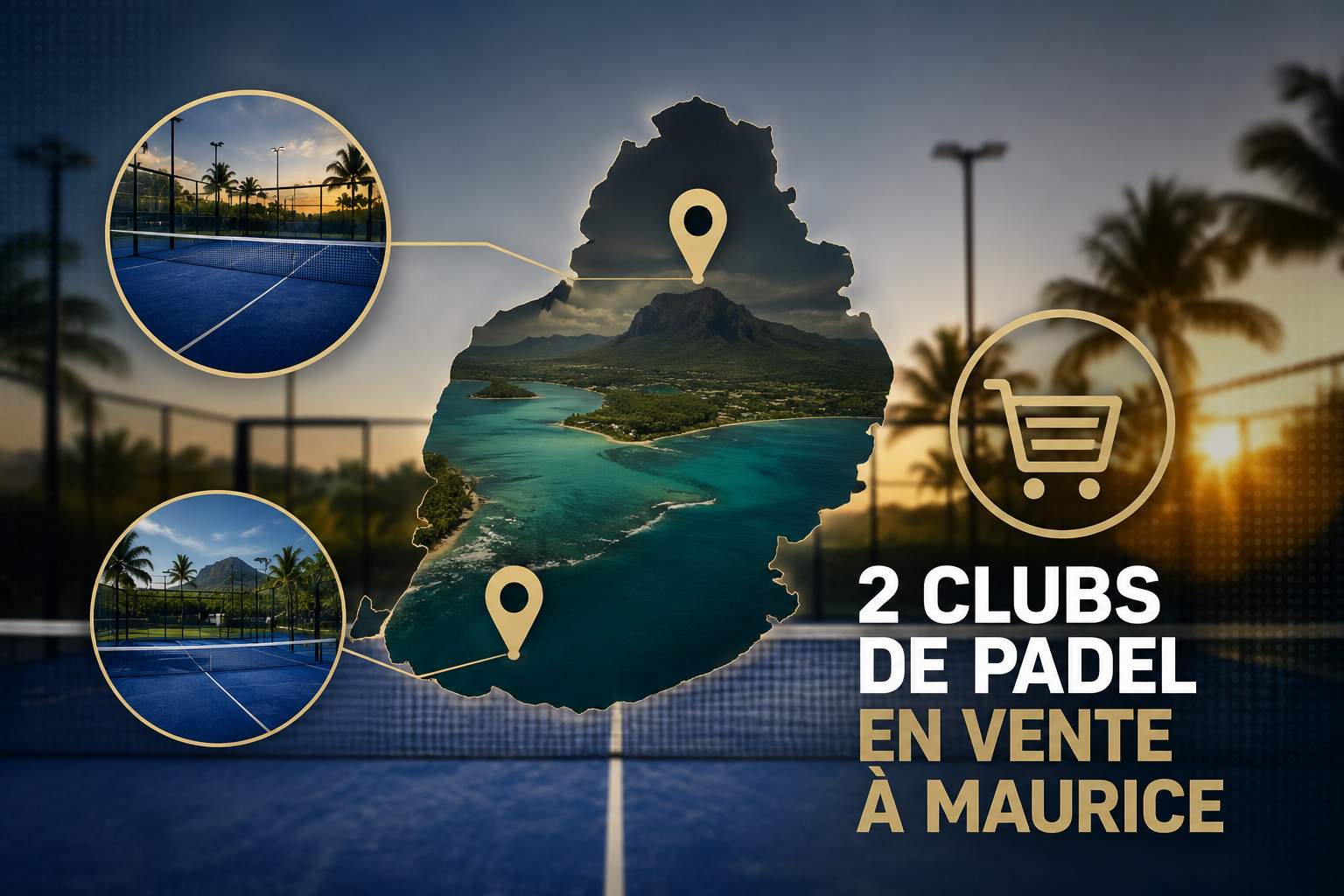 For sale: two padel clubs in Mauritius, starting from 330,000 euros
 How much does it actually cost to organize a FIP Bronze event?
 Padel How Lidl is transforming Crivit into a fully-fledged sports brand with Steffi Graf
 Compagnie des Alpes is accelerating its involvement in padel with PadelCity: a new step in its European strategy
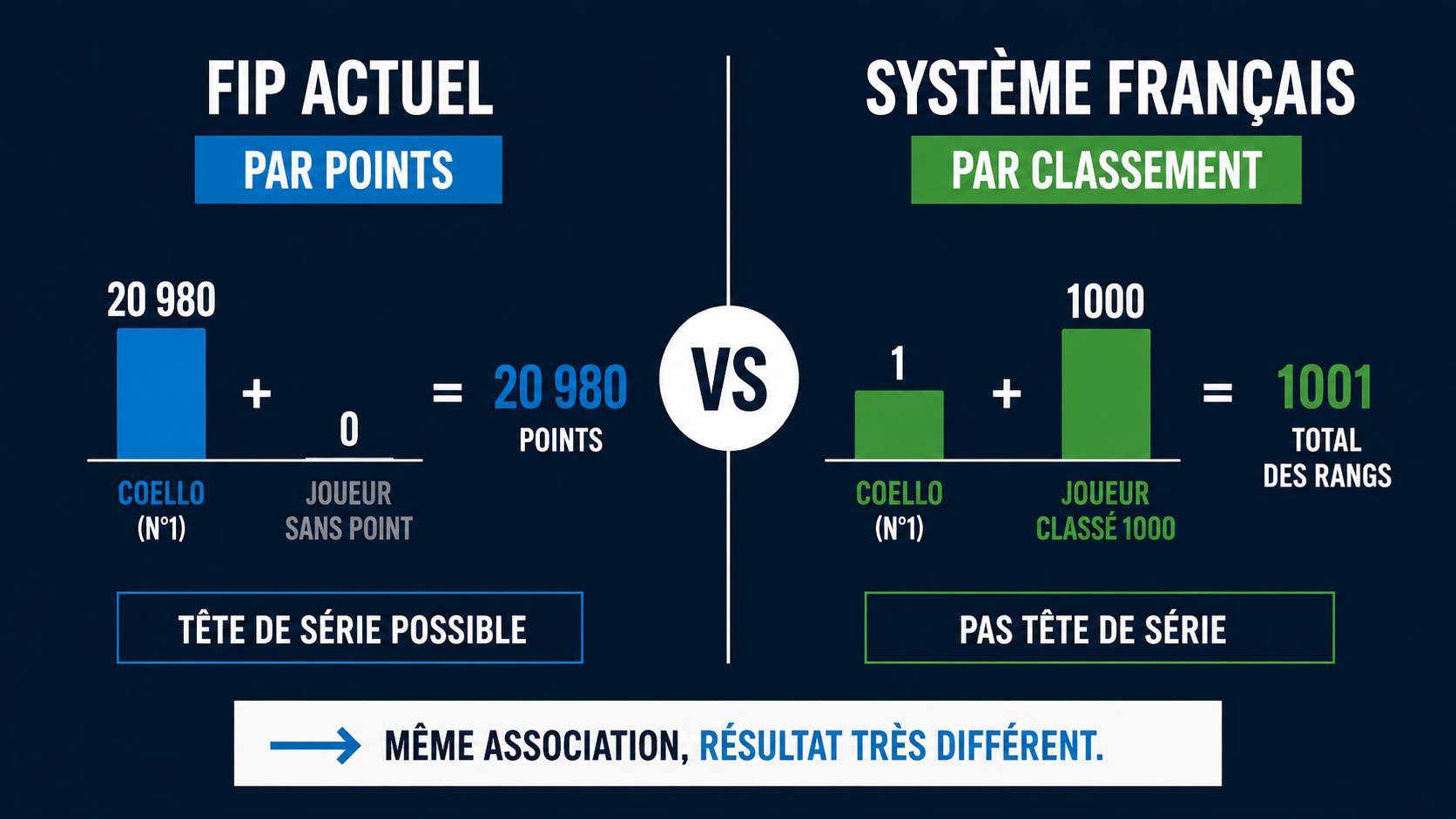 Coello with a player at 0 points ahead of two top 10 players: should the FIP ranking be reviewed?
 Les Pyramides: after 12 padel courts, the club is focusing on youth training
 Health Care Padel Tour 2026: What if your next padel tournament was played in Barcelona?
 FAST Padel Academy continues its development and establishes itself in Liège.
 What the analysis of the stroke reveals: tennis forehand vs. padel bandeja
 Has the bandeja disappeared from modern padel?
 Flat forehand in padel: 5 exercises from Cristian Álvarez to gain control and efficiency
 Why knowing how to play on the right and left can make all the difference
 Tapia reveals his recipe for beating Coello / Tapia: "I would bet everything on myself"
 How Coello defused Chingotto's game plan
 In padel, does the chemistry between a pair count as much as individual skill?
 Summer changes padel… but what if the real challenge wasn't hitting harder?
 Neither FIP Tour nor World Team Championship: the unique format of padel at the Mediterranean Games
 Premier Padel : when television can lengthen players' breaks
 Premier Padel Yes, a referee can refuse a player permission to go to the toilet
 Julien Seurin opens up about his mental state: "There are far more doubts than moments of happiness."
 More than a year later, Thomas Leygue is back in the top 150: behind the scenes of a comeback that's still unfinished
 Padel vs squash vs badminton: the scientific ranking of cardio intensity
 Why does Arturo Coello play with his right hand bandaged?
 What if your progress in padel depended on what nobody else is looking at?