

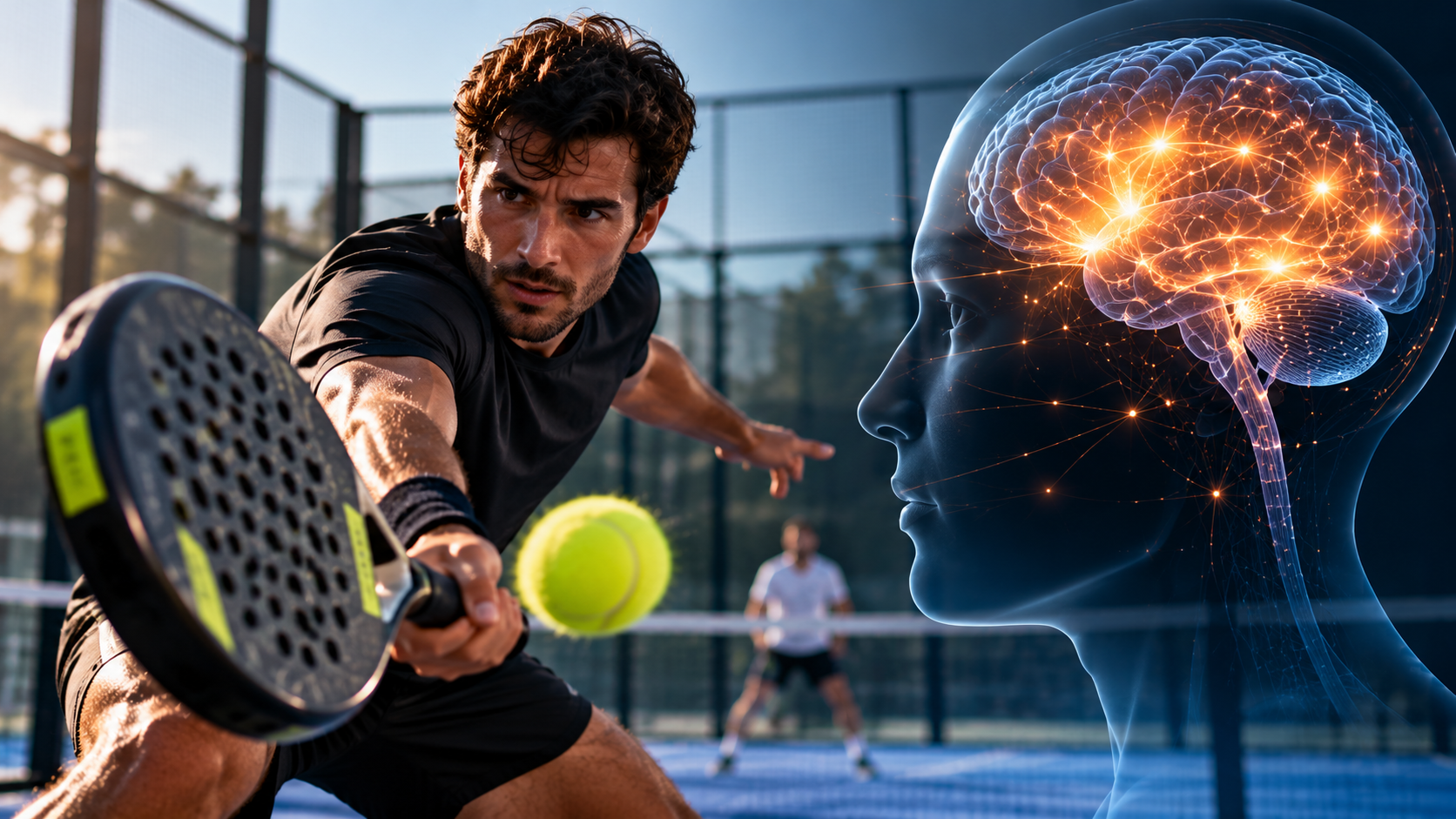








What if padel worked much more than just our muscles? Behind every exchange lies a succession of particularly complex brain operations. Anticipating a bounce off the glass, choosing between a lob and a chiquita, repositioning with one's partner or changing one's strategy in a few seconds: the brain is constantly engaged.
Neuroscience now allows us to better understand the mechanisms involved when we practice a sport like padel.
However, one question deserves to be asked: Can padel really improve our memory, concentration, and decision-making abilities?
In padel, the brain is working even before hitting the ball.
Imagine a classic situation: your opponent makes a bandeja that hits the side window.
Before you can defend yourself, your brain needs to analyze several pieces of information.
It estimates the speed of the ball, anticipates its bounce, assesses your position on the court and prepares an appropriate response.
All of this happens in an extremely short period of time.
This capacity relies in particular on the visual processing which allows us to interpret the information transmitted by the eyes, and on the motor anticipation , which consists of preparing a move even before the opposing action is finished.
The brain does not simply react. It constantly tries to predict what will happen.
This is particularly noticeable among experienced players, who sometimes seem to know where the ball is going to land before it even hits the glass.
Why do the glass walls make padel so interesting?
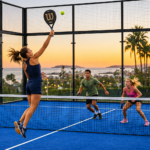
The presence of walls is one of the distinctive features of padel.
Unlike many racquet sports, the trajectory of the ball can be profoundly altered after one or more bounces.
The player must therefore regularly update their predictions.
A ball that seemed easy to defend can suddenly become difficult to hit after hitting two panes of glass.
This situation mobilizes what scientists call the visuospatial abilities .
These are the brain functions that allow us to understand positions, distances, and movements in space.
These abilities are also used in everyday life, for example when we drive, avoid an obstacle, or orient ourselves in an unfamiliar environment.
Padel is therefore an activity that is particularly rich in situations of spatial anticipation.
But this does not mean that its effects on the brain would necessarily be greater than those of tennis, badminton or other sports requiring constant adaptation.
Making a decision in a fraction of a second
Padel doesn't just require good movement. It also requires making choices.
Should you play a lob to regain the net? Defend slowly at the feet? Accelerate the ball? Or simply return an extra ball?
These decisions notably involve the executive functions .
This term refers to several essential brain capacities:
- Cognitive flexibility: knowing how to quickly modify one's strategy when a situation changes.
- Inhibitory control: resisting an automatic reaction, for example avoiding attempting a risky smash.
- La mémoire de travail : temporarily retain information useful for making a decision.
- Planning: prepare an action based on what might happen next.
These mechanisms come into play with every exchange.
A player may decide to attack, then completely change their intention when they realize that the opponent's ball is more difficult than expected.
This constant adaptation makes padel a cognitively demanding sport.
Why do experienced players seem to have more time?
The best players often give the impression of having more time to prepare their shots.
However, the ball is not moving any slower.
The difference stems in particular from their ability to quickly recognize certain situations.
With experience, the brain learns to identify clues: orientation of the opponent's body, preparation of the racket, position on the court or initial trajectory of the ball.
This information allows for more effective anticipation.
Research on sports expertise shows that experienced athletes can develop particularly effective perception and anticipation strategies in their discipline.
In other words, A good player doesn't just react faster: he often knows better what to look for and what to anticipate.
This is also why reading the game is a fundamental element of progress in padel.
Neuroplasticity: how the brain learns new movements
When a beginner is learning to use the back window, their first attempts are often hesitant.
He misjudges the bounce, positions himself too close to the ball, or prepares his movement too late.
With repetition and training, his movements gradually become more precise.
This progress is based in particular on the neuroplasticity .
This refers to the brain's ability to adapt its functioning and connections in response to learning.
Each new sporting skill involves coordination between the brain regions responsible for perception, decision-making, and movement.
Repetition then makes it possible to make certain actions more efficient and less costly in terms of attention.
This explains why an experienced player can defend a ball after the glass while already preparing to reposition himself.
The gesture became more automatic, freeing up some of his attention for other elements of the game.
Can padel improve memory and concentration?
This is a particularly interesting question, but it requires distinguishing between two phenomena.
The first is the immediate stimulation of the brain during practice.
On this point, there is no doubt that padel requires attention, coordination and decision-making.
The second concerns the lasting benefits on cognitive abilities.
Can playing padel regularly improve your concentration in daily life? Can this sport improve your memory?
Research on physical activity shows that regular exercise can have beneficial effects on certain brain functions.
A meta-analysis published in the British Journal of Sports Medicine in 2025 notably studied the effects of physical exercise on cognition, memory and executive functions.
The results support the general interest of physical activity for cognitive health.
But studies specific to padel remain insufficient to claim that this sport improves memory or concentration more than other disciplines.
Playing with two people: an additional social and cognitive dimension
Padel has another distinctive feature: it is mainly played in doubles.
The player must therefore take into account not only his opponents, but also his partner.
Communicating, allocating space, anticipating the other person's movements and adapting one's strategy are all additional tasks.
This cooperation mobilizes capacities for shared attention and collective coordination.
It also adds a social dimension to physical activity.
However, social interaction and regular physical activity are two important elements of general well-being.
Padel brings these dimensions together in a fun environment, which can promote motivation and regularity in practice.
Padel, a sport as demanding on the brain as on the body
Padel is often presented as an accessible, friendly sport and relatively easy to discover.
But behind this accessibility lies an activity that mobilizes many brain functions.
Reading trajectories, anticipating rebounds, coordination, decision-making, tactical adaptation: each exchange constitutes a new exercise for the brain.
Padel therefore does not only work the legs and arms. It also requires constant activity of the brain systems involved in perception, movement and decision-making.
It remains to be determined to what extent this stimulation translates into lasting cognitive benefits.
This is precisely one of the questions that interests researchers today studying the links between physical activity and brain function.
Scientific sources
- Erickson KI et al., Physical Activity, Cognition, and Brain Outcomes: A Review of the 2018 Physical Activity Guidelines, Medicine & Science in Sports & Exercise, 2019.
- Voss MW et al., Bridging Animal and Human Models of Exercise-Induced Brain Plasticity, Trends in Cognitive Sciences, 2013.
- Mann DTY et al., Perceptual-Cognitive Expertise in Sport: A Meta-Analysis, Journal of Sport and Exercise Psychology, 2007.
- Andoni Moreno Alcaraz, work on padel, neuroplasticity and cognitive rehabilitation, document submitted to Padel Magazine.























































 Padel Quest Awards: presentation of the final category, the stars of international padel, tonight at 18pm
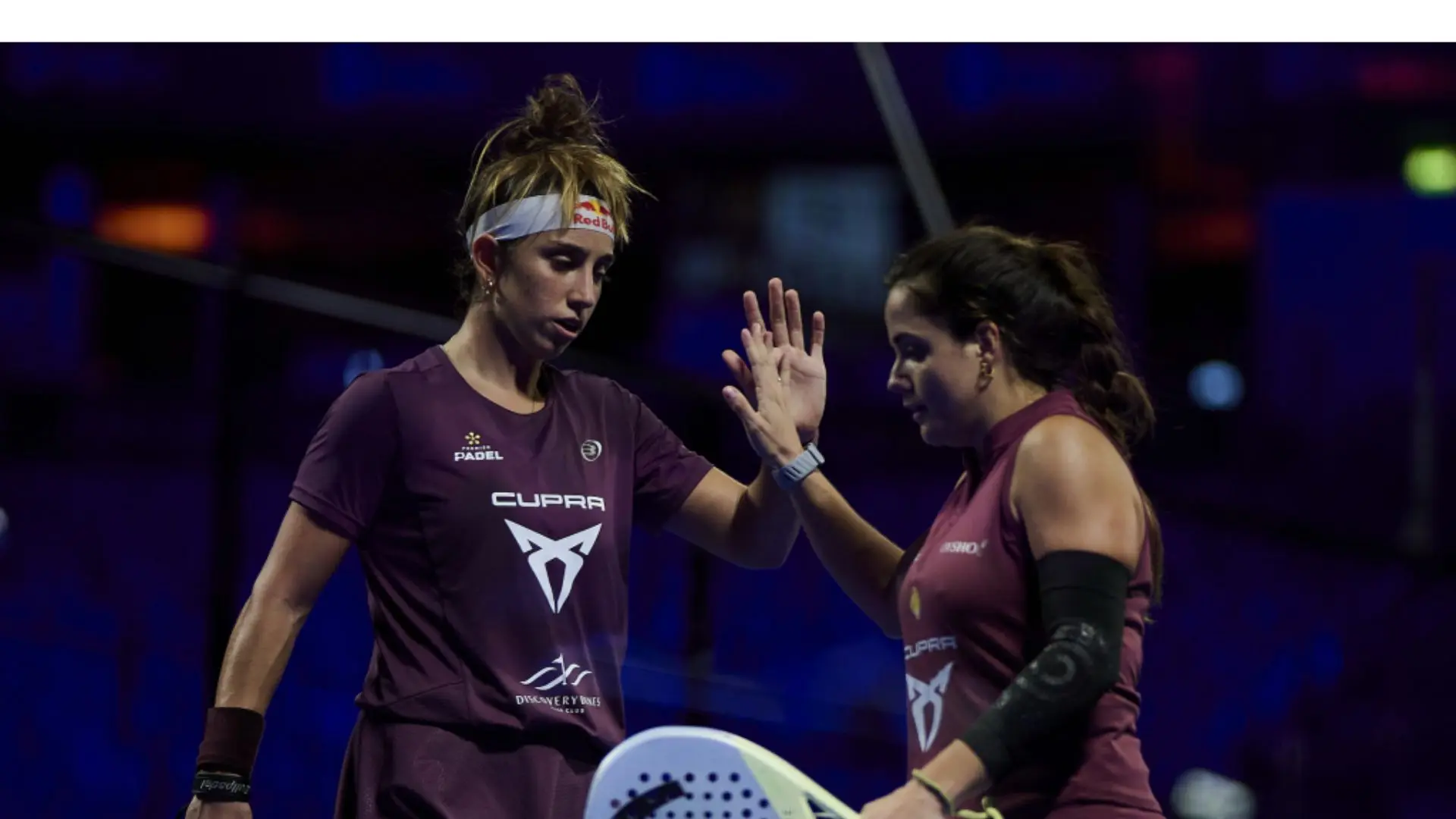 Josemaría and González regain the taste of victory against Sánchez / Ustero and reach the final of Dubai P1
 P3000 Break Padel Club – Deknuydt and Forichon knock out TS2, favorites upset before the quarterfinals
 "We're not a tournament club": the gamble taken by the two Henry sisters who are hosting a P3000 at The Break Padel Club
 Gonzalo Alfonso on his split with Tolito Aguirre: "It was painful, sad"
 2026 World Championships – Ustero in tears, Triay facing Brea: the world champions' confessions
 Paquito Navarro: "This is probably my last match with Spain."
 JAP1, JAP2: How to become a padel referee and what are the prospects?
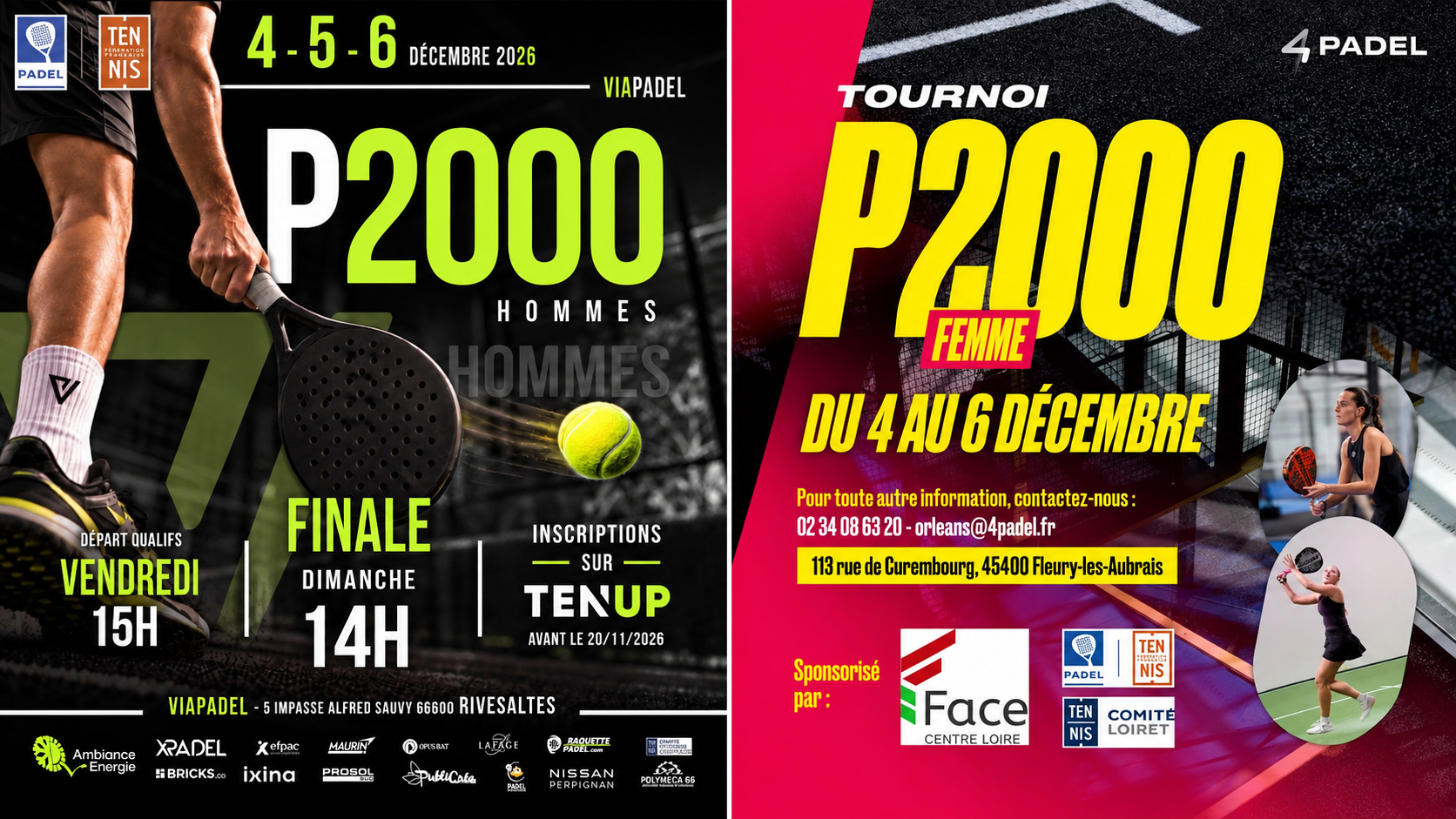 P2000: Scatena / Sescun, Courrin / Basso, Mansart / Bognard… the first pairs entered for the December events
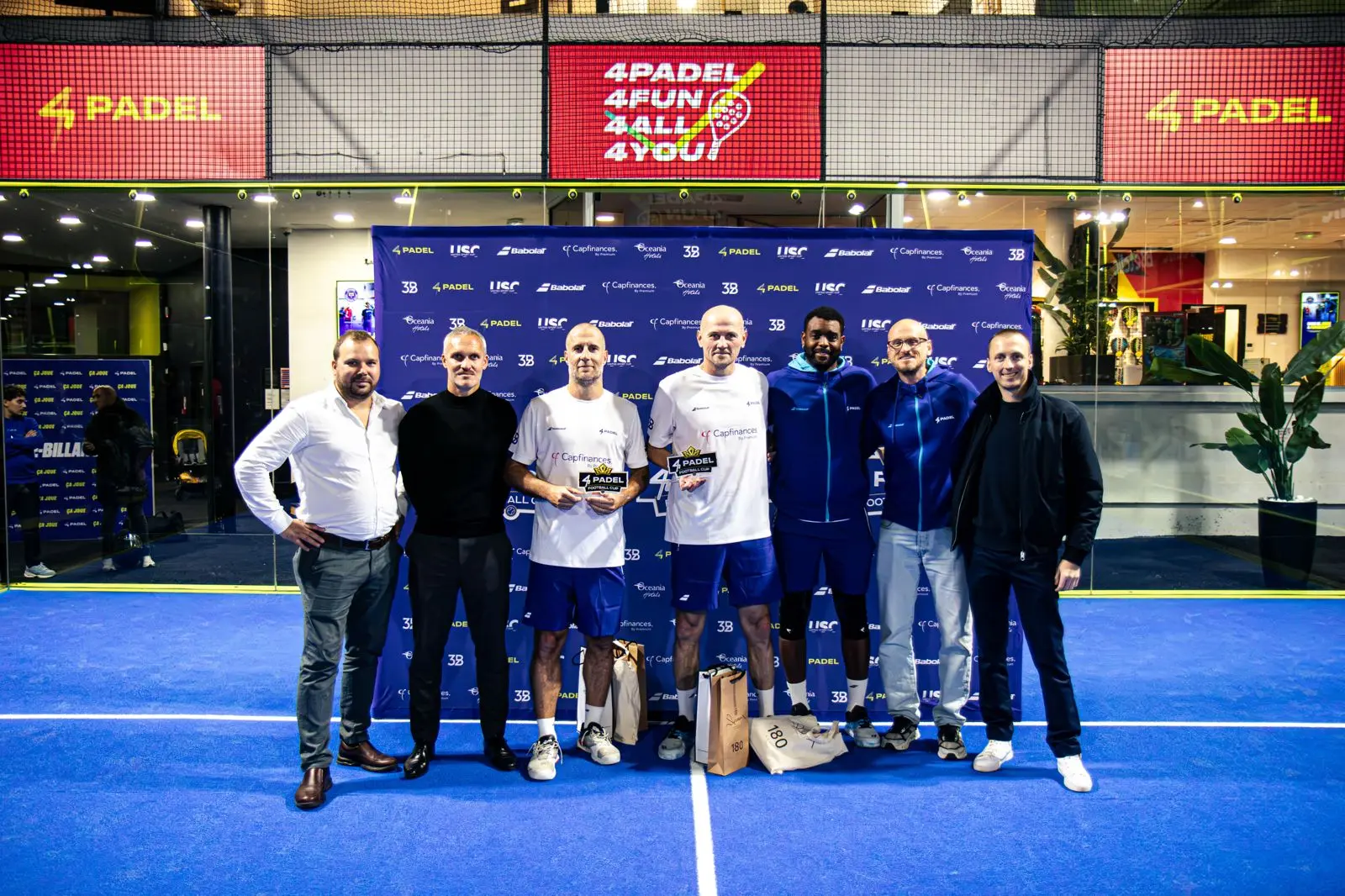 4PADEL Football Cup: Lille kicks off season 2 with a victory for Cheyrou/Cygan against Mandanda/Danic
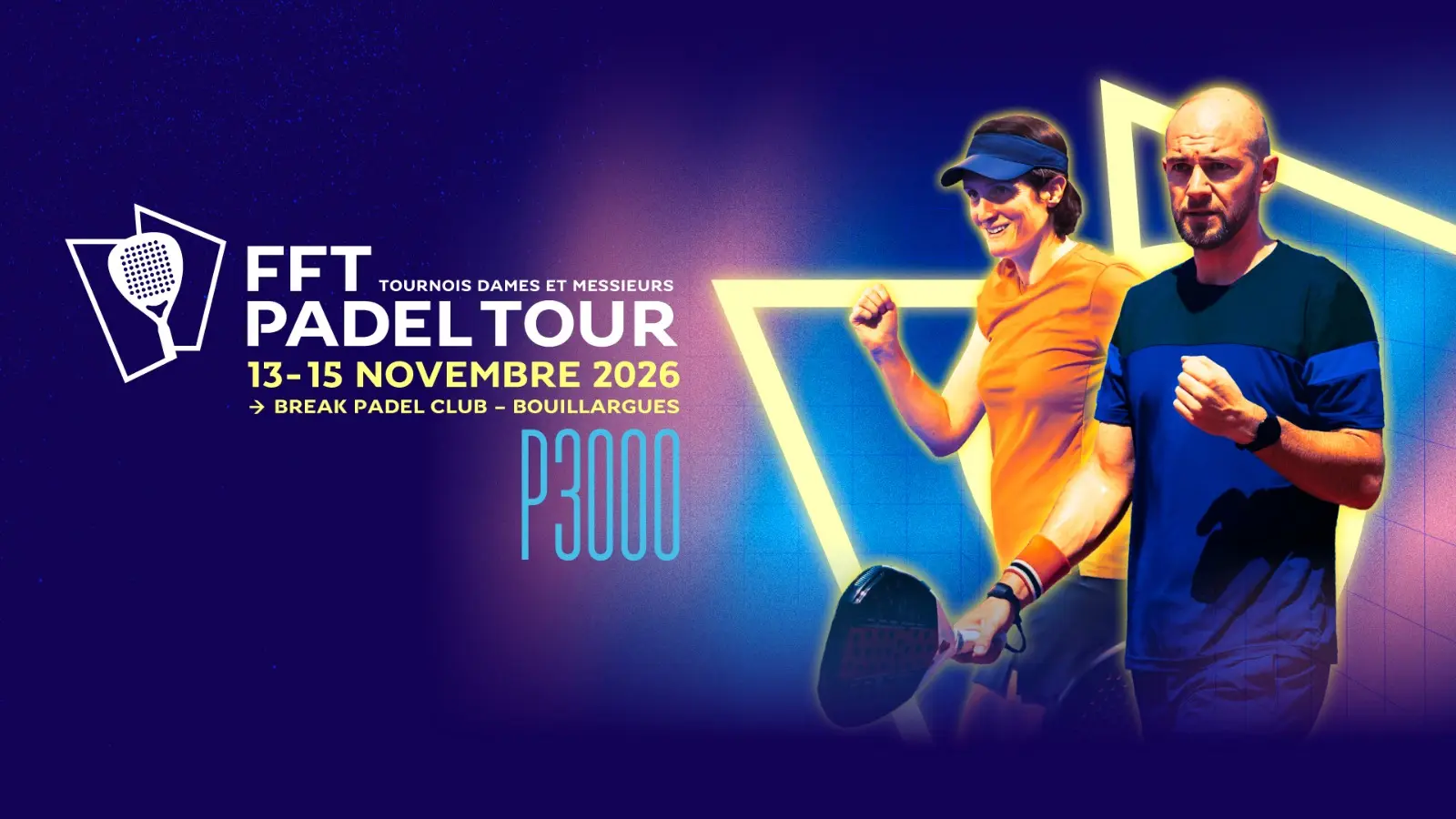 P3000 Bouillargues – Results / Live / Schedule
 Garrido / De Pascual: target Sanz and stay the course to reach the semi-finals
 FIP Silver Como – An XXL quarter-final awaits Boronad / Robert against Diestro / Fernández Lancha
 Javier Rodríguez Piris: “I would like Spain to host the World Championships in 2030”
 Dubai P1 – From qualifiers to semi-finals: Abate becomes the first Italian to reach the semi-finals of a tournament Premier Padel male
 Padel, weight training, and even HYROX: clubs are changing their model
 Padel court rentals: a global market estimated at 4,6 billion euros
 FIP Beyond: the new global padel circuit for amateurs and seniors
 More than 6,300 FIP-ranked players: professional padel is becoming international, but Spain dominates
 OSS Barcelona – Why Spain and France aren't yet playing in the same league
 Cancer and rehabilitation: could padel become a therapeutic tool?
 Padel injuries: ankle, knee, elbow, eye… what the latest figures reveal
 Shocking turn of events at Dubai P1: Coello and Tapia have also withdrawn!
 Padel serve: a good serve is especially good preparation for the third shot.
 What the analysis of the stroke reveals: tennis forehand vs. padel bandeja
 Has the bandeja disappeared from modern padel?
 Flat forehand in padel: 5 exercises from Cristian Álvarez to gain control and efficiency
 Why can Libaak/Alfonso beat almost everyone… except Coello/Tapia?
 Tapia reveals his recipe for beating Coello / Tapia: "I would bet everything on myself"
 How Coello defused Chingotto's game plan
 In padel, does the chemistry between a pair count as much as individual skill?
 Organising a national padel competition: what are the FFT's requirements for clubs?
 Organising a P2000 or a P3000: how much does it really cost clubs?
 P2000 or P3000: what are the differences in prize money, format and organization in 2028?
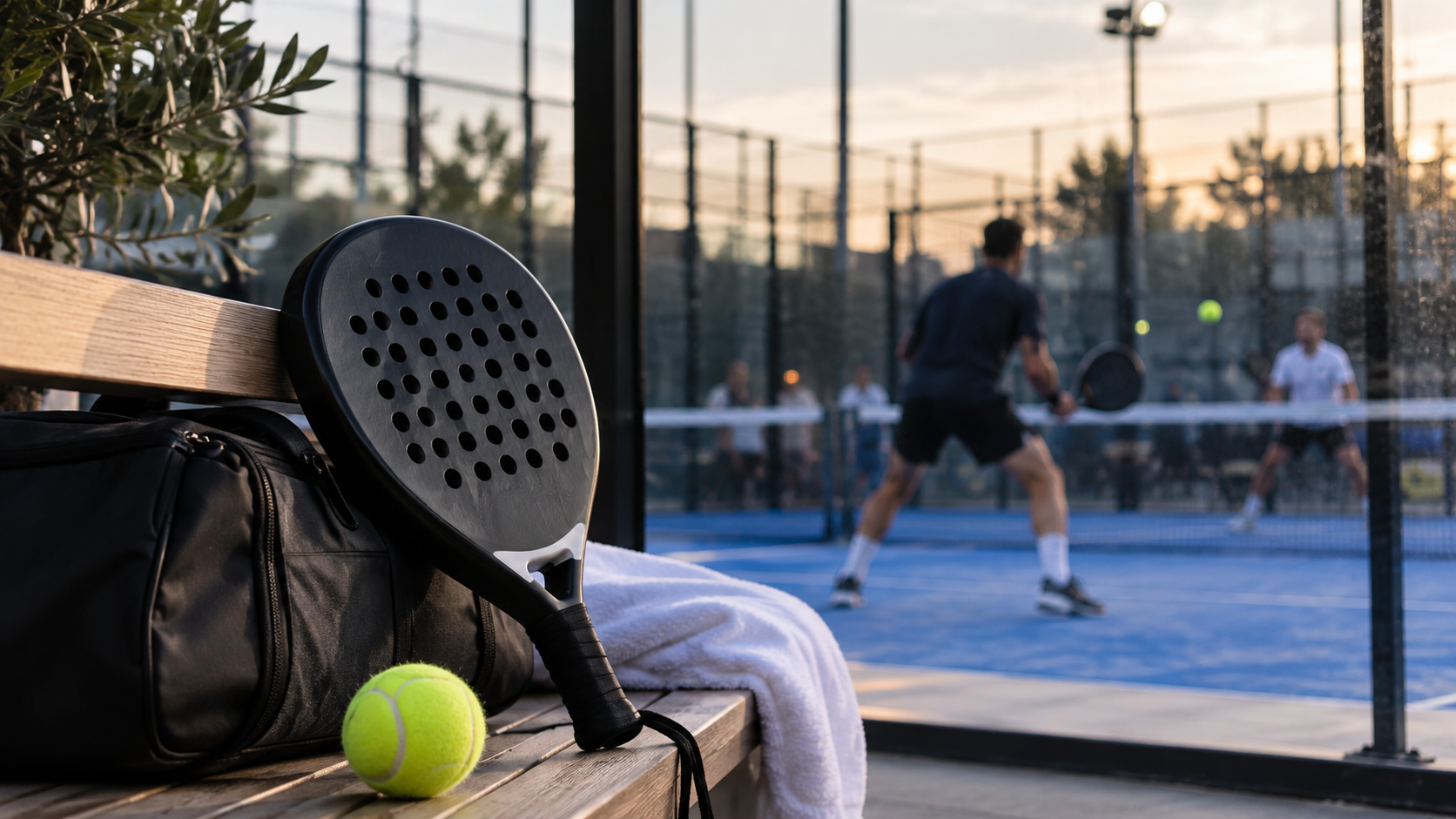 Do you lose your ranking? Padel FFT after more than a year without a license / without competition?
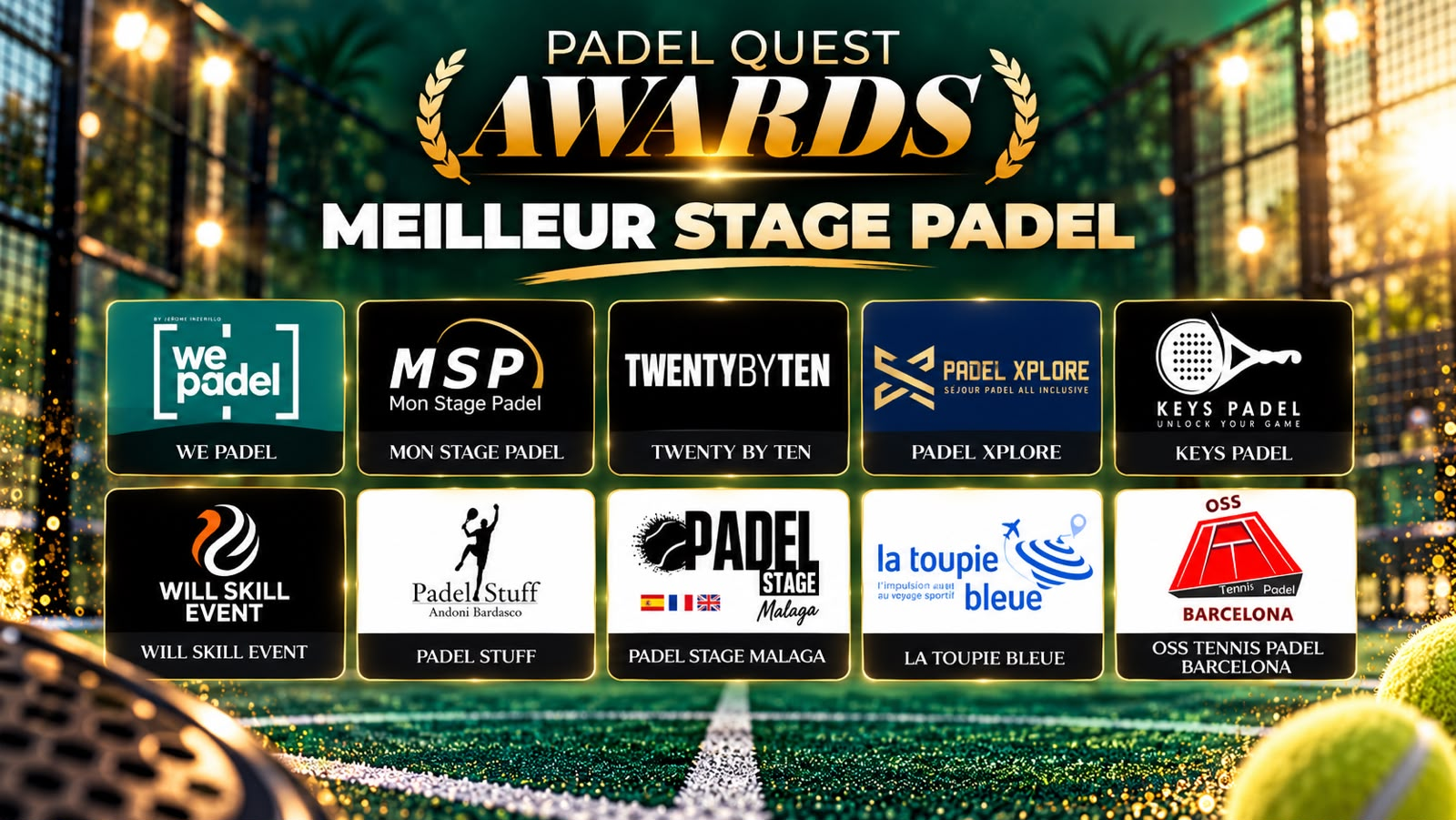 Padel Quest Awards: Ten specialists in the running for the title of best padel training camp of the year
 Padel Xperience: The Academy opens on November 2nd in Marcheprime, ahead of the complex's inauguration in 2027
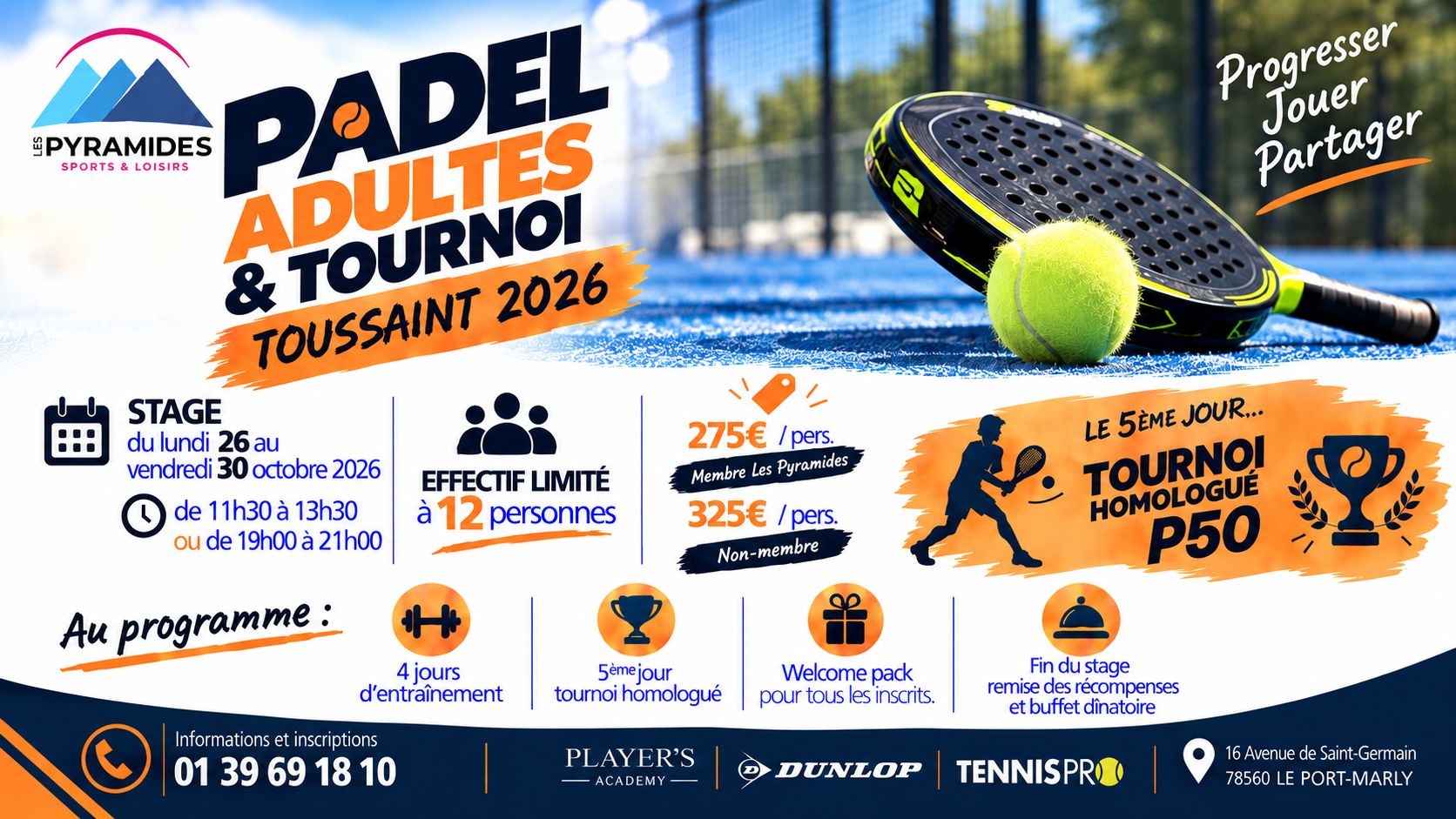 All Saints' Day – Les Pyramides are organizing a padel training camp for adults with a P50 tournament to close out the week