


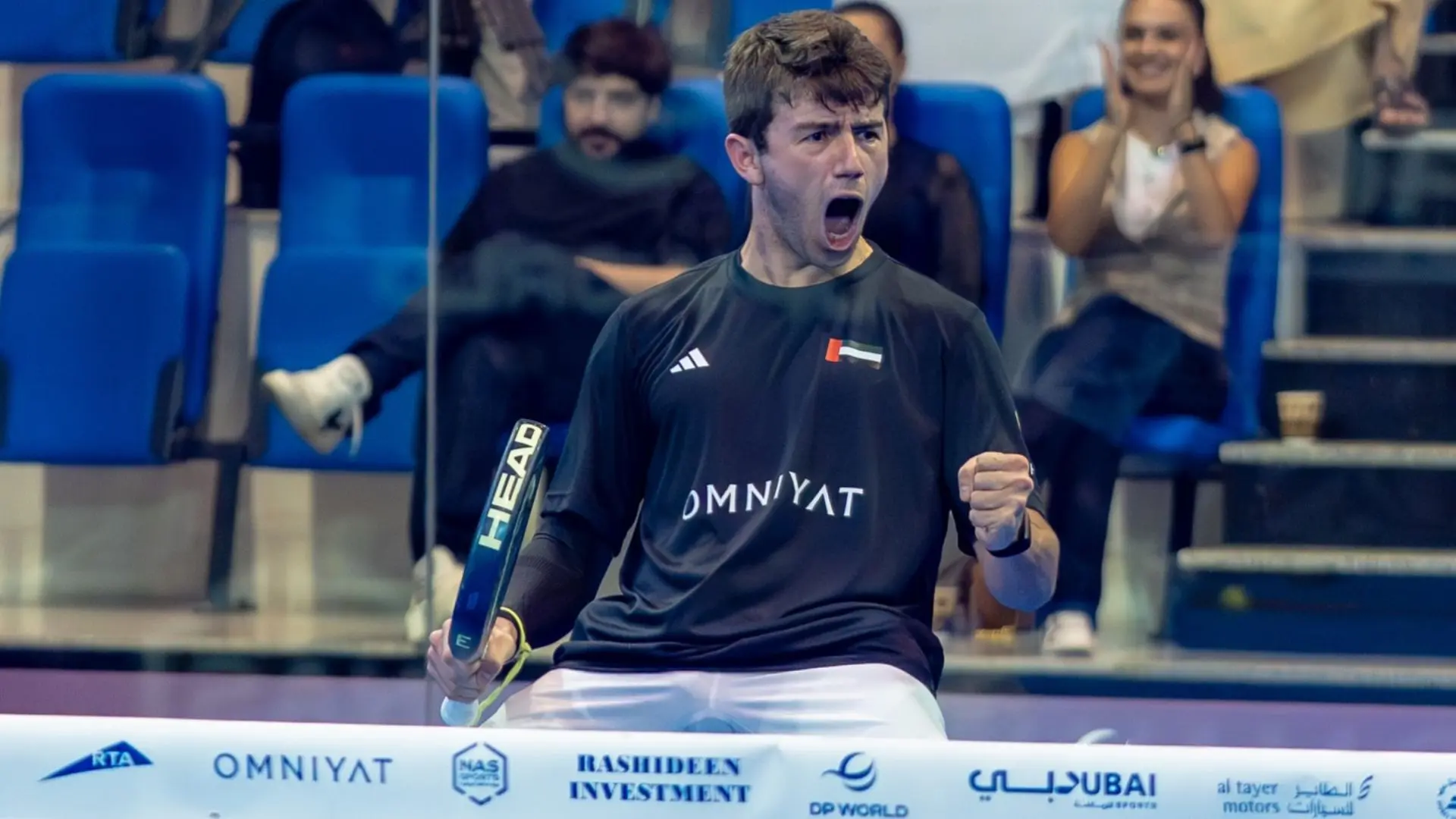








This is one of the controversies of these 2026 Padel World Championships in Doha. Five Spanish players naturalized as Emirati citizens, Iñigo Jofre, Arnau Ayats, Enrique Goenaga, Ignacio Vilariño and Fran Jurado were not allowed to represent the United Arab Emirates. The reason, the eligibility regulations of the International Padel Federation (FIP) which now imposes stricter criteria for representing a national team. Present in Doha despite his absence from the track, Íñigo Jofre expressed his disappointment at the microphone of VeinteDiez , specifically mentioning an appeal to the Court of Arbitration for Sport (CAS).
Five absences that change everything for the United Arab Emirates
The United Arab Emirates had high ambitions for this 2026 edition.
During World Championships 2024 The Emirati team had caused a surprise by finishing fifth , notably thanks to several recently naturalized Spanish players.
Among them were Iñigo Jofre, Arnau Ayats, Fran Jurado and Sergio Icardo which had allowed the Emirates to reach an important milestone.
Since then, the project had been strengthened with the arrival of other Spanish players, notably Enrique Goenaga and Ignacio Vilariño .
But a few weeks before the World Cup, Emirati ambitions were seriously thwarted.
Five players were ultimately not allowed to participate leaving the team with a considerably weakened squad.
This is a particularly frustrating situation for those most directly involved, who had travelled to Doha.
Íñigo Jofre: "We were there, but..."
Despite their absence from the list of authorized players, Iñigo Jofre, Arnau Ayats, Enrique Goenaga and Ignacio Vilariño were spotted in the stands of the Khalifa International Tennis & Squash Complex who came to support their teammates.
When questioned by the Spanish media Twenty Ten Jofre revisited this situation.
"There have been a series of rules because of which they consider that we are not eligible," he explained.
The Spanish player does not hide his disappointment at missing a competition he hoped to play in under the Emirati colors.
But he also does not wish to enter into a direct confrontation with the FIP.
"I don't know if it's fair or unfair. If the other naturalized players can participate, it's because they meet the requirements."
A way of acknowledging the existence of the regulation, while regretting the consequences of its application.
According to statements reported by VeinteDiez, Jofre also indicated that the case had been brought before the Court of Arbitration for Sport , with the aim of obtaining clarification and, possibly, being able to participate in future international competitions.
The players involved therefore hope that their absence in Doha will not mark the end of their adventure with the Emirati national team.
Why can't these players participate?
The problem stems from eligibility criteria set by the FIP to represent a nation .
The regulation includes several conditions.
A player must, in particular, possess the permanent nationality of the country he wishes to represent and not have represented another nation in a Senior World Championship.
He must also not have represented another country in an official competition during the 36 previous months .
But another condition directly concerns players who were naturalized after their birth.
To be able to represent their new nation, they must demonstrate at least one of these connections:
- To have been born in the country in question.
- Having a parent or grandparent born in that country.
- Having resided in the country for at least five years , if the installation took place after the age of 10, or three years if it started before that age.
These criteria considerably complicate the situation of Spanish players who have recently become naturalized Emirati.
However, the FIP makes one exception: Each federation can request special authorization for a maximum of two players per competition , when they do not meet the criteria of birth, ancestry or residence, provided they demonstrate a real link with the country.
This request must be submitted well in advance and remains subject to the approval of the International Federation.
A regulation that is causing debate
This situation reignites a debate that first emerged at the 2024 World Championships.
At the time, The United Arab Emirates had chosen to naturalize several Spanish players. to strengthen their team and compete with the best nations.
A strategy that had paid off with a fifth-place world ranking, ahead of historic teams like France and Brazil .
But this policy also raised questions about the representativeness of the national teams.
Should a national team be allowed to strengthen itself with recently naturalized players, or should preference be given to players with a longer-standing connection to their country?
The FIP has chosen to strengthen the eligibility conditions in order to better regulate these situations.
This decision can be understood in the context of developing national teams, but it directly penalizes the sporting project built by the United Arab Emirates.
The United Arab Emirates severely weakened in Doha
From a sporting perspective, the consequences are significant.
Without Jofre, Ayats, Goenaga, Vilariño and Jurado The United Arab Emirates is losing several players who are regulars on the international circuit and capable of competing with top-level pairs.
This is a significant contrast to the 2024 edition, where the team was able to field a much more competitive squad.
This year, the Emirates have notably suffered two heavy defeats. 3-0 against Paraguay and Sweden without managing to compete with their opponents.
This will allow us to measure the impact of these absences on the team's ambitions.
This is a case that could have consequences for the next World Championships.
Beyond the case of the United Arab Emirates, this affair could have repercussions on future international competitions.
More and more federations are seeking to strengthen their national teams with players who have multiple nationalities or who have chosen to represent another country.
The FIP regulations now impose a precise framework which could influence the construction of national teams in the coming years.
For Íñigo Jofre and his teammates , however, the objective remains to be able to return to the tracks wearing the Emirati jersey.
Pending any developments in their situation, The five players will have to be content with watching this World Cup from the stands. far from the role they hoped to play on the Doha tracks.

I discovered padel directly during a tournament, and frankly, I didn't really like it at first. But the second time, it was love at first sight, and since then, I haven't missed a single match. I'm even ready to stay up until 3am to watch a final of Premier Padel !






































































 Dubai P1: One tournament too many after the World Championships?
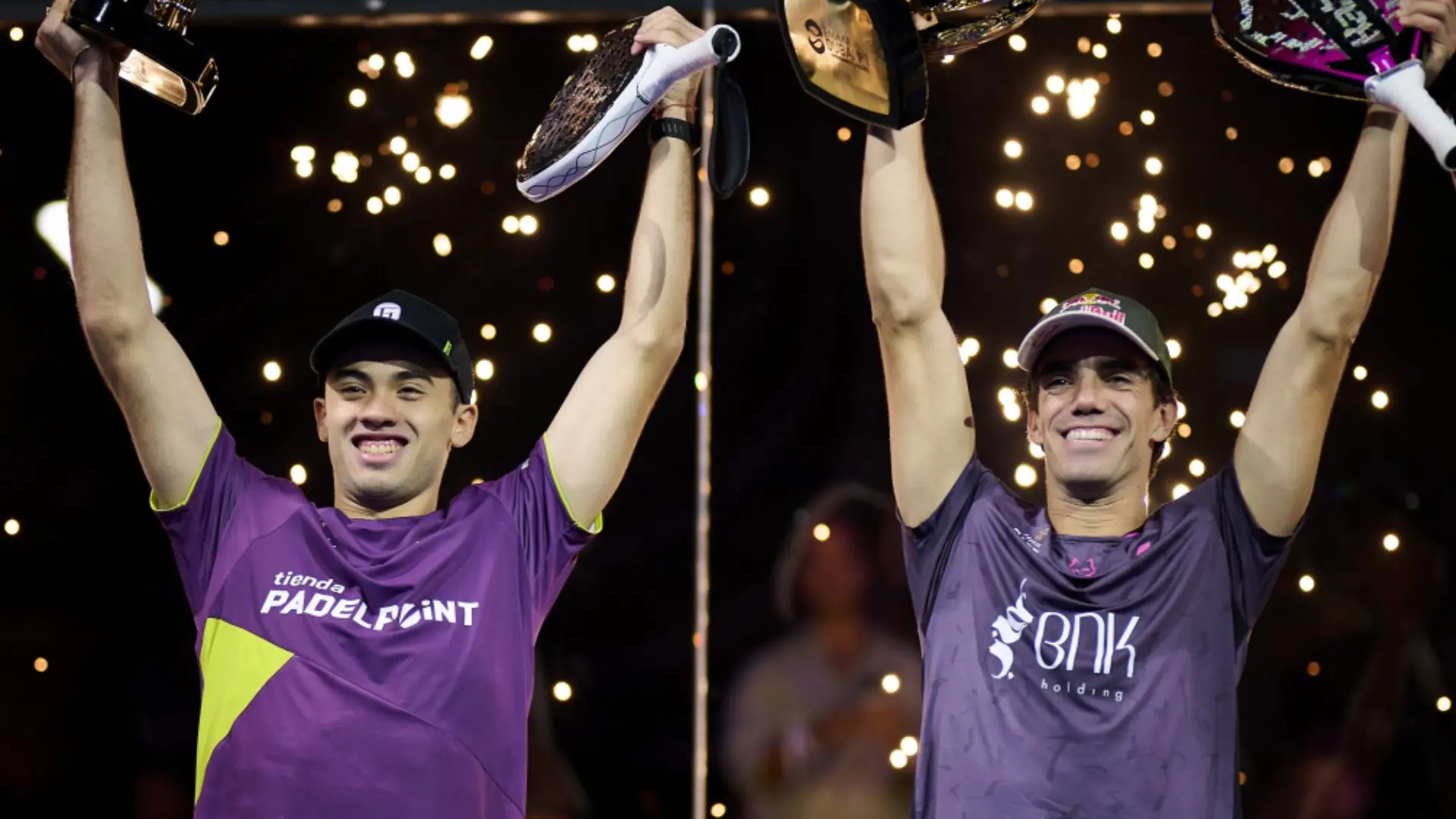 Dubai P1 – Lebrón wanted to give this title to Augsburger: “I knew he had suffered last week”
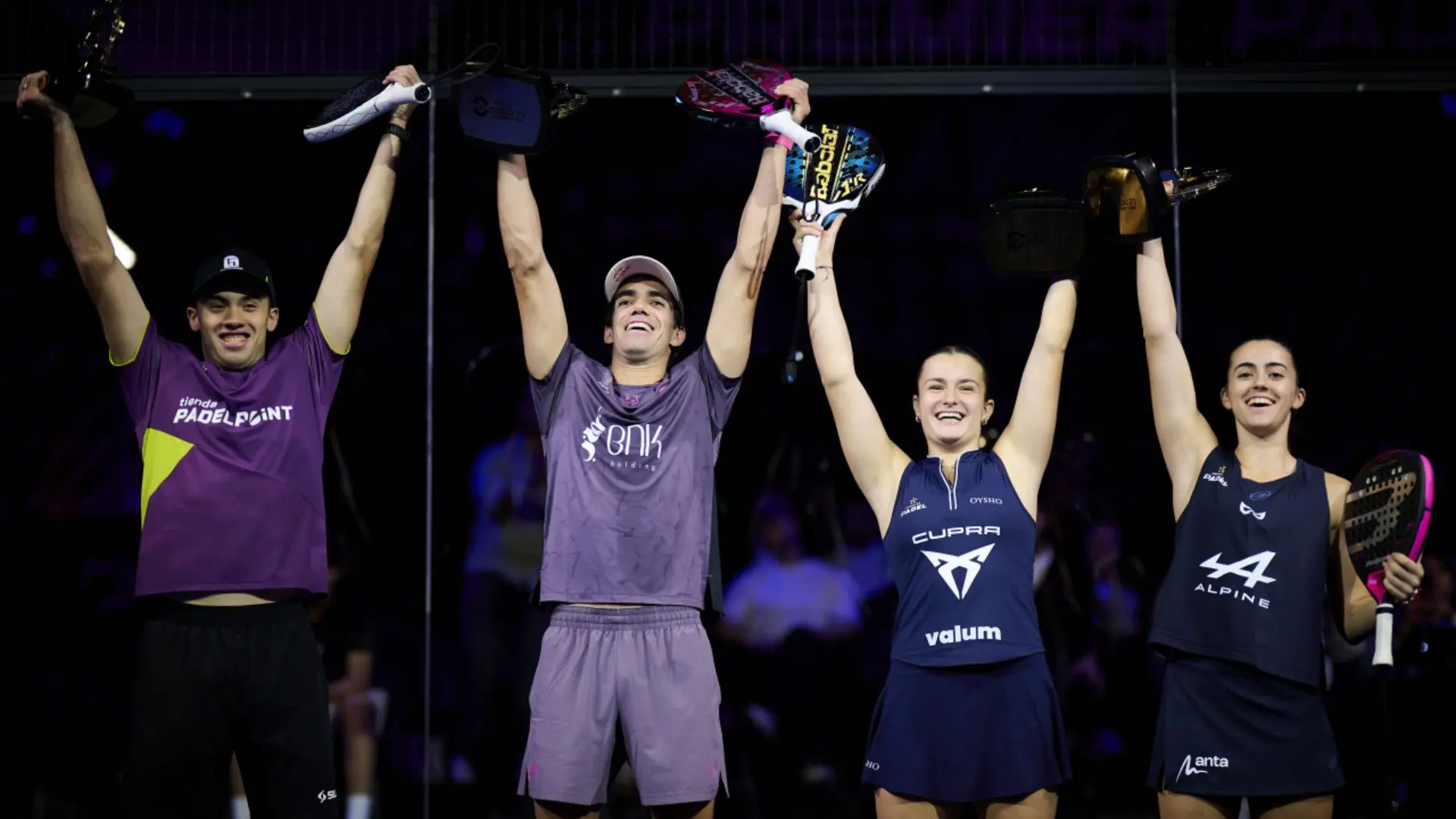 Dubai P1 – How much did the tournament champions and players earn? A breakdown of the prize money and FIP points
 Two and a half years to create a padel racket: HEAD reveals the manufacturing secrets of its 2027 models
 Javier Rodríguez Piris: “I would like Spain to host the World Championships in 2030”
 "We're not a tournament club": the gamble taken by the two Henry sisters who are hosting a P3000 at The Break Padel Club
 Gonzalo Alfonso on his split with Tolito Aguirre: "It was painful, sad"
 P3000 Break Padel Club – Down a set, Pothier and Mansart find the strength to join Dardaine/Senjean in the final
 Dubai P1 – Where to watch the finals live? TV schedule, fixtures and times
 P3000 Break Padel Club – Where to watch the semi-finals? Schedule, posters and times
 Dubai P1 – Claudia Fernández serves three times in a row in the final… without anyone noticing the mistake
 Dubai P1 – Lebrón / Augsburger live up to their status as favorites and secure their second title of the season
 Padel, weight training, and even HYROX: clubs are changing their model
 Padel court rentals: a global market estimated at 4,6 billion euros
 FIP Beyond: the new global padel circuit for amateurs and seniors
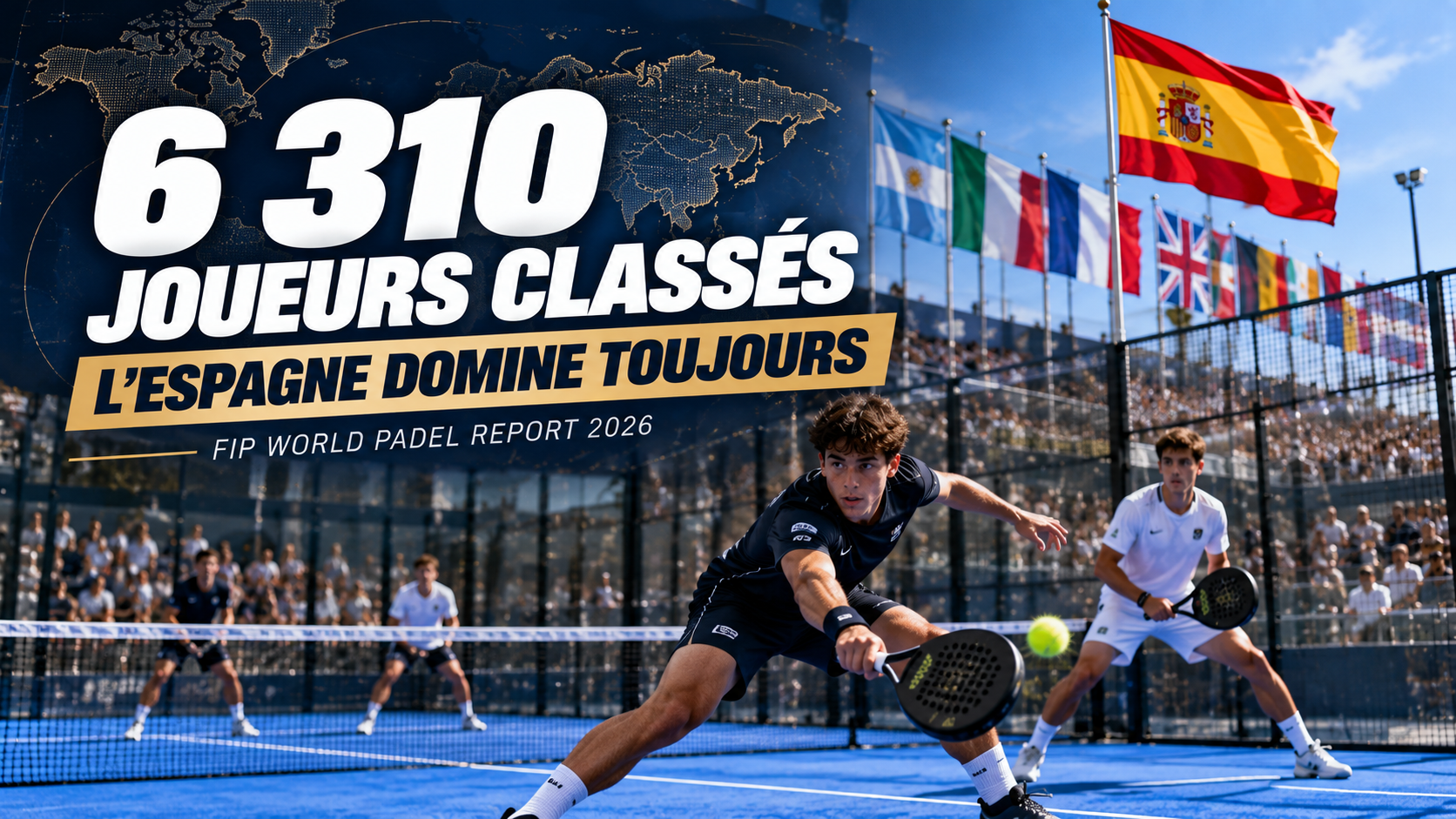 More than 6,300 FIP-ranked players: professional padel is becoming international, but Spain dominates
 OSS Barcelona – Why Spain and France aren't yet playing in the same league
 Cancer and rehabilitation: could padel become a therapeutic tool?
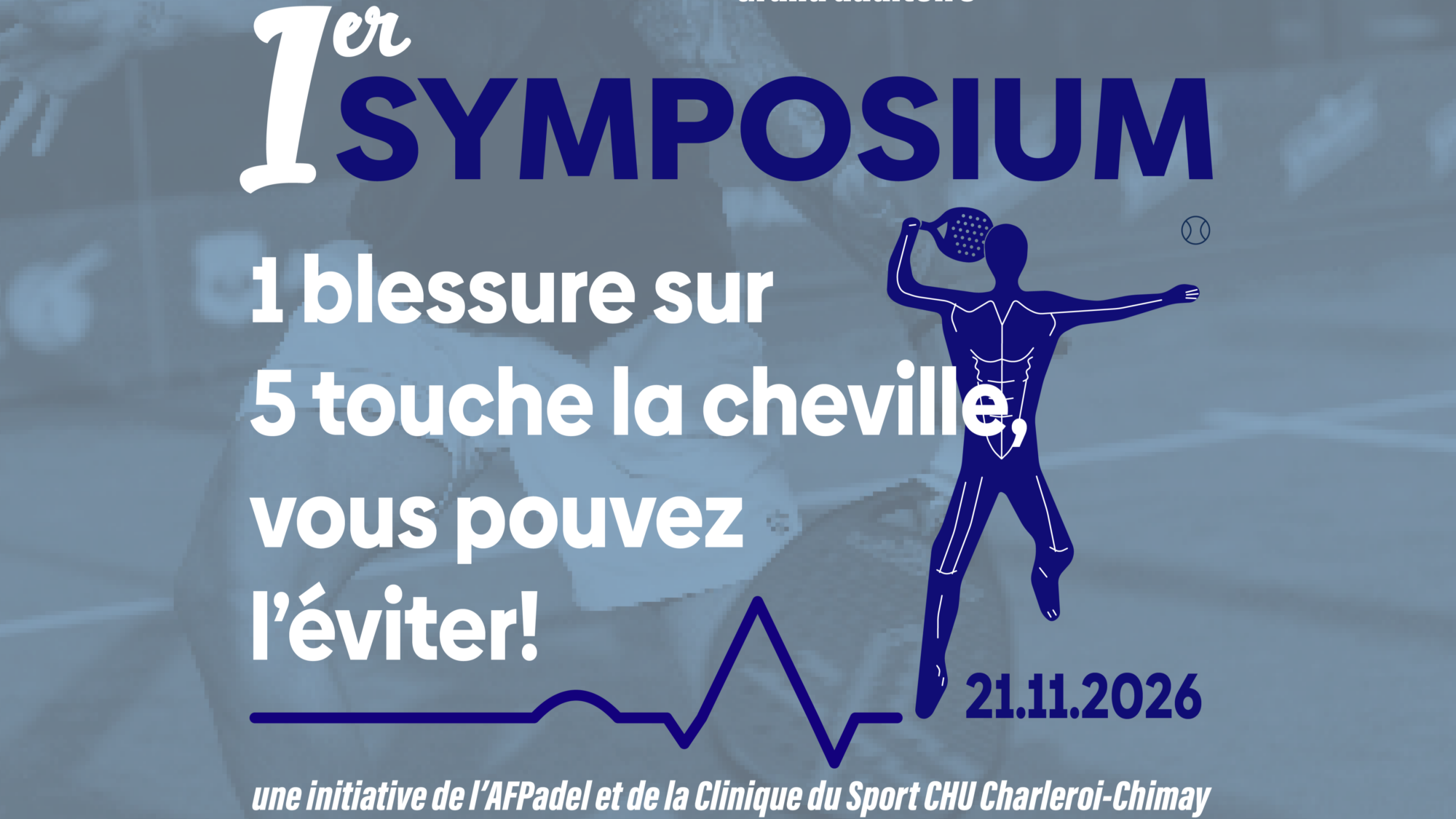 Padel injuries: ankle, knee, elbow, eye… what the latest figures reveal
 Shocking turn of events at Dubai P1: Coello and Tapia have also withdrawn!
 Padel serve: a good serve is especially good preparation for the third shot.
 What the analysis of the stroke reveals: tennis forehand vs. padel bandeja
 Has the bandeja disappeared from modern padel?
 Flat forehand in padel: 5 exercises from Cristian Álvarez to gain control and efficiency
 Why can Libaak/Alfonso beat almost everyone… except Coello/Tapia?
 Tapia reveals his recipe for beating Coello / Tapia: "I would bet everything on myself"
 How Coello defused Chingotto's game plan
 In padel, does the chemistry between a pair count as much as individual skill?
 Organising a national padel competition: what are the FFT's requirements for clubs?
 Organising a P2000 or a P3000: how much does it really cost clubs?
 P2000 or P3000: what are the differences in prize money, format and organization in 2028?
 Do you lose your ranking? Padel FFT after more than a year without a license / without competition?
 Memory, reflexes, concentration: what happens in our brain when we play padel?
 Padel Quest Awards: Ten specialists in the running for the title of best padel training camp of the year
 Padel Xperience: The Academy opens on November 2nd in Marcheprime, ahead of the complex's inauguration in 2027
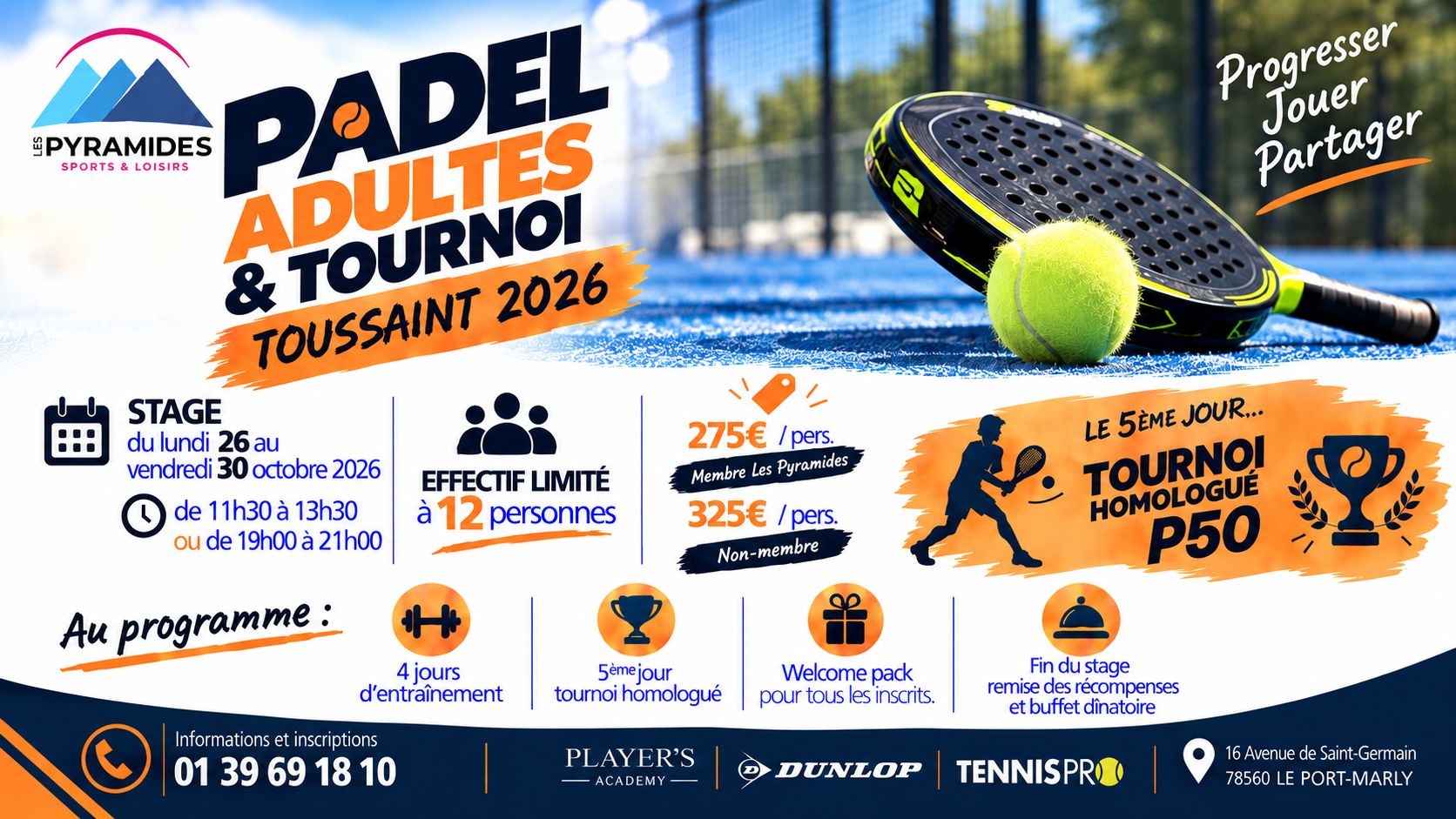 All Saints' Day – Les Pyramides are organizing a padel training camp for adults with a P50 tournament to close out the week